
The company assembled the 0.8-liter 3-cylinder Hyundai G3HA engine between 2011 and 2019, but it was only fitted to the small Eon model, which was offered for sale in several Asian nations. This motor is available in a gas modification and is part of the particularly cost-effective iRDE 2 series.
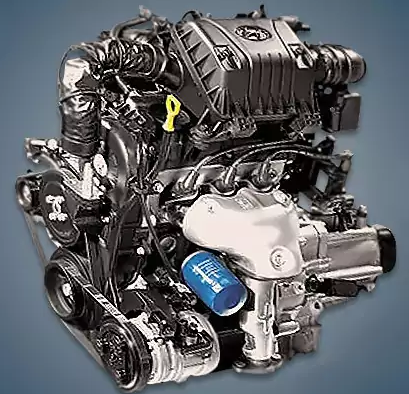
G3HA, G4HA, G4HC, G4HE, G4HD, and G4HG are members of the Epsilon family.
The engine was mounted on:
- Hyundai Eon 1 (HA) in 2011 – 2019.
Specifications
| Production years | 2011-2019 |
| Displacement, cc | 814 |
| Fuel system | distributed injection |
| Power output, hp | 56 |
| Torque output, Nm | 75 |
| Cylinder block | cast iron R3 |
| Block head | aluminum 9v |
| Cylinder bore, mm | 67 |
| Piston stroke, mm | 77 |
| Compression ratio | 10.1 |
| Features | SOHC |
| Hydraulic lifters | no |
| Timing drive | belt |
| Phase regulator | no |
| Turbocharging | no |
| Recommended engine oil | 5W-30 |
| Engine oil capacity, liter | 2.5 |
| Fuel type | petrol |
| Euro standards | EURO 5 |
| Fuel consumption, L/100 km (for Hyundai Eon 2015) — city — highway — combined |
5.8 3.8 4.7 |
| Engine lifespan, km | ~200 000 |
Disadvantages of the Hyundai G3HA engine
Strong motor vibrations and noisy operation are complained about on specialized forums.
Additionally, crankcase ventilation, idle speed controller, and throttle pollution cause a lot of problems.
A low resource here distinguishes spark plugs from high-voltage wires.
Additionally, remember to adjust the valves’ thermal clearance every 90,000 kilometers.