
From 2008 to 2014, the 2.0-liter Hyundai G4KD engine—which was manufactured in the USA and South Korea—was fitted to a number of the company’s well-known models until it was replaced by the comparable G4NA. This motor is currently being assembled for the local market at the Hyundai Wia plant in Shandong province.
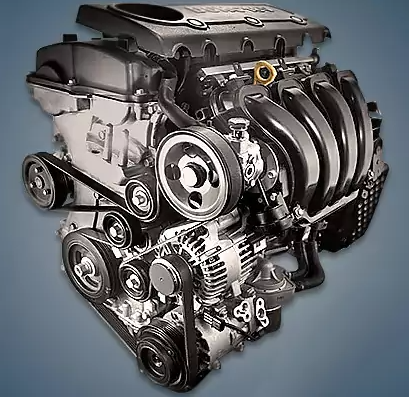
Two 2.0 and 2.4-liter naturally aspirated engines with distributed injection were part of the Hyundai-Kia company’s updated Theta II power unit lineup, which was unveiled in 2008. Phase shifters on both shafts and a new intake manifold with a proprietary VIS geometry change system set them apart from the Theta family’s predecessors. These engines, which have an aluminum cylinder block, cast-iron liners, an aluminum 16-valve block head without hydraulic lifters, and a timing chain drive, are identical in every other way.
A single phase regulator was added to this engine in some markets; South Korean Kia Forte sedans are particularly likely to have one.
Theta 2.0L family: G4KA, G4KD, G4KF, G4KH, G4KL.
The engine was mounted on:
- Hyundai Sonata 5 (NF) in 2008 – 2010; Sonata 6 (YF) in 2009 – 2014;
- Hyundai ix35 1 (LM) in 2009 – 2013;
- Kia Cerato 2 (TD) in 2008 – 2013;
- Kia Magentis 2 (MG) in 2008 – 2010;
- Kia Optima 3 (TF) in 2010 – 2013;
- Kia Sportage 3 (SL) in 2010 – 2014.
Specifications
| Production years | 2008-2014 |
| Displacement, cc | 1998 |
| Fuel system | distributed injection |
| Power output, hp | 145 – 165 |
| Torque output, Nm | 190 – 200 |
| Cylinder block | aluminum R4 |
| Block head | aluminum 16v |
| Cylinder bore, mm | 86 |
| Piston stroke, mm | 86 |
| Compression ratio | 10.5 |
| Hydraulic lifters | no |
| Timing drive | chain |
| Turbocharging | no |
| Recommended engine oil | 5W-30, 5W-40 |
| Engine oil capacity, liter | 4.5 / 6.5 (depending on version) |
| Fuel type | petrol |
| Euro standards | EURO 4/5 |
| Fuel consumption, L/100 km (for Hyundai ix35 2012) — city — highway — combined |
10.4 6.4 7.9 |
| Engine lifespan, km | ~300 000 |
| Weight, kg | 124.2 |
Disadvantages of the Hyundai G4KD engine
The most well-known issue with Theta engines is the development of scuffing in the cylinders as a result of catalyst crumbs entering the engine’s combustion chambers from the exhaust manifold. Progressive oil consumption comes next, followed by another piston knock.
Oil pressure gradually decreases as a result of wear on the camshaft journals and oil pump gears caused by the appearance of abrasive in the engine lubrication system. Additionally, this involves the crankshaft liners being cranked at the first significant engine load.
The officials claim that although the timing chain is intended to last the entire life of the power unit, it frequently runs less than 150,000 kilometers. The valves meet the pistons after the extended chain frequently just jumps.
The unit’s weaknesses also include a phase regulator in the early years of production, weak and constantly flowing gaskets and seals, and a limited supply of attachments.