
Only the second generation Santa Fe and the fourth generation Grandeur were equipped with the 2.2-liter diesel Hyundai D4EB or 2.2 CRDi engine, which was manufactured between 2005 and 2010. A similar device was installed in small quantities on the Hyundai Sonata EF sedan between 2002 and 2004.
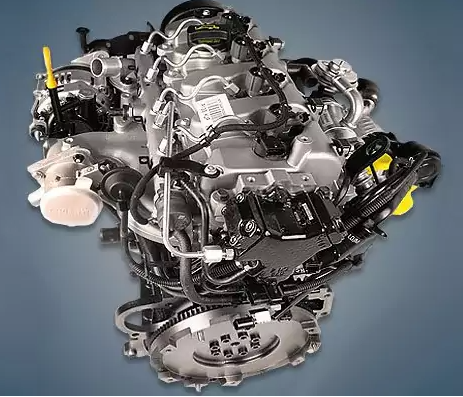
The second generation of the 2.0-liter D4EA diesel engine was introduced in 2005, but the new Hyundai Santa Fe in the CM body required a more potent power unit. This led to the development of the 2.2-liter D4EB diesel engine, which basically differed only in piston diameter. Its structural features include a timing belt drive, an MHI TF035HL variable geometry turbocharger, an intercooler, an aluminum head with a single 16-valve camshaft and hydraulic lifters, a Bosch CP3 common rail fuel system, and a cast-iron cylinder block. The initial modification produced 335 Nm of torque and 150 horsepower.
A second version of the 2.2-liter diesel engine, sometimes known as the D4EB-F, debuted in 2006 and produced 343 Nm of torque and 155 horsepower. Both the Grandeur sedan and the Santa Fe crossover have this engine under the hood.
Diesels D3EA and D4EA are also part of the D family.
The engine was mounted on:
- Hyundai Grandeur 4 (TG) in 2006 – 2010;
- Hyundai Santa Fe 2 (CM) in 2005 – 2010.
Specifications
| Production years | 2005-2010 |
| Displacement, cc | 2188 |
| Fuel system | Common Rail |
| Power output, hp | 150 – 155 |
| Torque output, Nm | 335 – 343 |
| Cylinder block | cast iron R4 |
| Block head | aluminum 16v |
| Cylinder bore, mm | 87 |
| Piston stroke, mm | 92 |
| Compression ratio | 17.3 |
| Hydraulic lifters | yes |
| Timing drive | belt |
| Turbocharging | yes |
| Recommended engine oil | 5W-30, 5W-40 |
| Engine oil capacity, liter | 6.5 |
| Fuel type | diesel |
| Euro standards | EURO 4 |
| Fuel consumption, L/100 km (for Hyundai Santa Fe 2008) — city — highway — combined |
9.6 6.0 7.3 |
| Engine lifespan, km | ~400 000 |
| Weight, kg | 201.4 |
Disadvantages of the Hyundai D4EB engine
In addition to requiring strict adherence to maintenance regulations and the replacement of its consumables, this power unit cannot tolerate low-quality fuels and lubricants. If not, you run the risk of experiencing wear on the valve rockers or camshaft cams.
Although the Common Rail Bosch CP3 fuel system in this diesel engine is incredibly dependable, poor-quality diesel fuel quickly wears out and nozzles start to pour. Cases of piston destruction were reported here, even with a single defective injector.
The timing belt is supposed to be replaced every 90,000 kilometers, but occasionally it doesn’t go that far, and because replacing it is difficult and costly, the owners would rather drive until the very end. Additionally, when the water pump wedges, the belt may break, causing the valves to bend.
The glow plugs and their relays, crankshaft damper pulley, drive belt tensioner, and turbine regulator rod are not very significant resources for this diesel engine. Additionally, the EGR valve quickly clogs and the intercooler boost pipe frequently flies off.