
Before being redesigned, the 1.3-liter 12-valve Hyundai G4EH engine, which was manufactured in Korea between 1994 and 2005, was fitted to the European Getz and the first two Accent models.
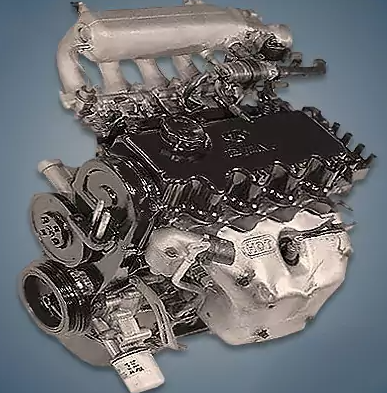
Two 1.3-liter Alpha family engines—one carburetor with the G4EA index and the other G4EH with distributed fuel injection—made their debut on the Hyundai Accent model in 1994. These power units, which had a cast-iron cylinder block and an aluminum 12-valve SOHC head with hydraulic lifters, a straightforward timing belt drive, and a fully contemporary ignition system with coils, were designed to resemble Mitsubishi engines of the era.
A more potent version of the 85-hp engine debuted on the second-generation Accent after the initial distributed fuel injection engine modifications produced 60 and 75 horsepower.
G4EA, G4EH, G4EE, G4EB, G4EC, G4ER, G4EK, and G4ED are all part of the Alpha series.
The engine was mounted on:
- Hyundai Accent 1 (X3) in 1994 – 1999;
- Hyundai Accent 2 (LC) in 1999 – 2005;
- Hyundai Getz 1 (TB) in 2002 – 2005.
Specifications
| Production years | 1994-2005 |
| Displacement, cc | 1341 |
| Fuel system | distributed injection |
| Power output, hp | 60 – 85 |
| Torque output, Nm | 105 – 119 |
| Cylinder block | cast iron R4 |
| Block head | aluminum 12v |
| Cylinder bore, mm | 71.5 |
| Piston stroke, mm | 83.5 |
| Compression ratio | 9.5 |
| Features | SOHC |
| Hydraulic lifters | yes |
| Timing drive | belt |
| Turbocharging | no |
| Recommended engine oil | 5W-40, 10W-40 |
| Engine oil capacity, liter | 3.8 |
| Fuel type | petrol |
| Euro standards | EURO 2/3 |
| Fuel consumption, L/100 km (for Hyundai Accent 1996) — city — highway — combined |
8.3 5.2 6.5 |
| Engine lifespan, km | ~300 000 |
| Weight, kg | 107.7 |
Disadvantages of the Hyundai G4EH engine
Although this motor is reasonably dependable, its erratic performance is the primary source of complaints. Clogged injectors, contaminated throttle assemblies or idle speed controllers, candle contacts, cracked ignition coils, and high-voltage wires are common causes.
This family’s units are characterized by a short lifespan of hydraulic lifters; many owners replace them, and they frequently start to knock even before 80,000 kilometers of operation. A decrease in lubricant pressure brought on by wear on the oil pump plunger could be the reason.
Depending on the unit’s version, the timing belt is intended to last 60 or 90 thousand kilometers. However, it frequently bursts earlier, which typically results in a bend in the valves. Installing a new water pump is preferable when replacing the belt because it has fewer resources.
The power unit can use up to one liter of oil every 1000 kilometers after 200,000 kilometers. Hardened valve stem seals are typically the culprits and require replacement. Stuck rings could be the cause, but decarbonizing alone could be sufficient.
An unreliable starter, short-lived engine mounts, frequent lubricant leaks, and the appearance of a check engine due to a burned muffler corrugation are some of this motor’s weak points. Additionally, this is where the fuel supply’s emergency shutdown is frequently initiated.