
Since its assembly in Korea in 2001, the 2.5-liter Hyundai D4CB or 2.5 CRDi diesel engine has undergone three significant upgrades for EURO 3, 4, and 5, respectively. They installed it on the H-1 series minibuses, and it is also well-known for the original Kia Sorento model.
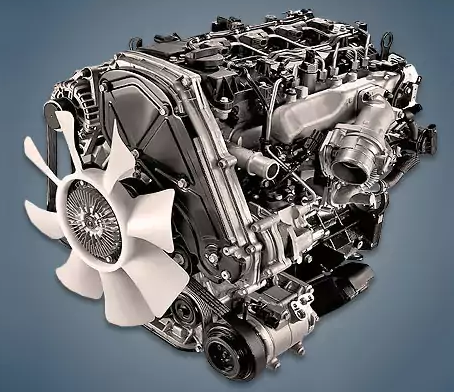
A 2.5-liter diesel engine made its debut on the H-1 and Starex minibuses in 2001. Before then, Hyundai-Kia manufactured Mitsubishi 4D56 replicas, but the new engine was very different: it was a completely modern machine with a Common Rail system instead of a vortex-chamber diesel engine. A 16-valve aluminum head with hydraulic lifters, an intercooler, a sophisticated three-chain timing drive, a block of balance shafts, and a cast-iron block for four cylinders are all included.
These diesel engines came in three different generations: EURO 3, EURO 4, and EURO 5.
- The first generation of the unit produced 116–140 horsepower and 314–343 Nm of torque. It had a Garrett GT1752LS turbine and a Bosch Common Rail system with a pressure of up to 1360 bar.
- With a BorgWarner BV43 variable geometry turbine and a Bosch CR system operating at 1600 bar, the second generation was unveiled in 2006. Its power increased to 170 horsepower and 392 Nm.
- The third generation, which debuted in 2011, features an MHI TD03L4 turbine and a different CR Delphi operating at 1800 bar. The torque rose to 441 Nm, the power stayed constant, and the compression ratio was reduced from 17.7 to 16.4.
The engine was installed on:
- Hyundai Starex 1 (A1) in 2001 – 2007;
- Hyundai Starex 2 (TQ) since 2007;
- Kia Sorento 1 (BL) in 2002 – 2009.
Specifications
| Production years | since 2001 |
| Displacement, cc | 2497 |
| Fuel system | Common Rail |
| Power output, hp | 116 – 177 |
| Torque output, Nm | 314 – 441 |
| Cylinder block | cast iron R4 |
| Block head | aluminum 16v |
| Cylinder bore, mm | 91 |
| Piston stroke, mm | 96 |
| Compression ratio | 16.4 – 17.7 |
| Hydraulic lifters | yes |
| Timing drive | chain |
| Turbocharging | yes |
| Recommended engine oil | 5W-30, 5W-40 |
| Engine oil capacity, liter | 8.2 |
| Fuel type | diesel |
| Euro standards | EURO 3/4/5 |
| Fuel consumption, L/100 km (for Kia Sorento 2008) — city — highway — combined |
10.1 6.7 7.9 |
| Engine lifespan, km | ~350 000 |
| Weight, kg | 263.2 |
Disadvantages of the Hyundai D4CB engine
When the engine was replaced under warranty in 2008 and 2009, a connecting rod broke because of faulty bolts. The fuel pump frequently drove chips in engines with Common Rail Delphi after 2011.
The most well-known issue with this diesel engine is the burnout of the copper washers beneath the nozzles, which causes the engine to quickly coking and has very depressing results.
A clogged oil receiver is another frequent issue with such a motor. Periodically checking it is advised because it may cause the liners to turn unexpectedly.
The lower chain, which drives the oil pump and balancers, is the weakest of the three chains that make up the gas distribution mechanism. The primary timing chain typically breaks along with it.
The EGR valve, turbocharger geometry change system, vacuum control system, hydraulic lifters, and crankshaft liners do not have the best resources.