
The Hyundai Motor Company produces the six-cylinder in-line diesel Hyundai D6BR engine. With the exception of a few models found in small buses and short trucks, nearly every D6BR engine variant has turbocharging.
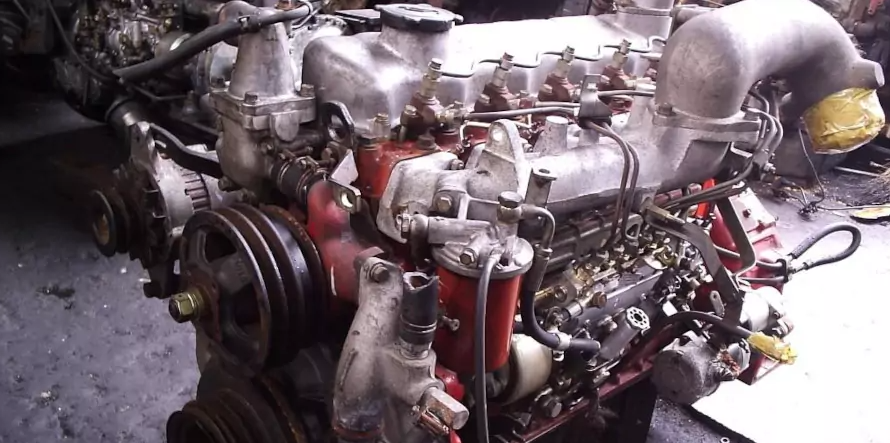
The only Hyundai vehicles that still have these internal combustion engines are the Aero Town buses and HD120 trucks. The D6BR has been in use since the early 2000s and is still in use today. The motors can, of course, be updated on a regular basis.
Specifications
| Manufacturer | KIA-Hyundai |
| Also called | D6BR |
| Production years | 2000 |
| Cylinder block alloy | aluminum |
| Fuel system | direct injection |
| Configuration | inline |
| Number of cylinders | 6 |
| Piston stroke, mm | 115 |
| Cylinder bore, mm | 118 |
| Compression ratio | 17.5 |
| Displacement, cc | 7545 |
| Power output, hp | 198/2900 |
| Torque output, Nm / rpm | 500/3000 |
| Fuel type | diesel |
| Euro standards | Euro 4 |
| Weight, kg | 1045 (dry) |
| Firing order | 1-5-3-6-2-4 |
| Engine lifespan, thousand km — official information |
1 000 |
One of the most popular engines produced in South Korea is the D6BR. First, it should be mentioned that this unit has the largest capacity—nearly 7,600 cubic centimeters, or roughly 12–14 liters of lubricant. Diesel fuel powers the D6BR engines, which offer superior low-end traction. At 60 to 70 kilometers per hour, these internal combustion engines typically use 22 to 25 liters of fuel every 100 kilometers.
D6BR engine maintenance
The table shows that D6BR motors have a millionth resource. This situation is not depicted on paper; rather, it is quite real. But in order to get such a high efficiency from the engines in question, it is crucial:
- Fill them with exceptionally high-quality raw materials (from fuel to oil and antifreeze);
- avoid overloading under heavy load conditions;
- and follow the manufacturer’s basic ICE maintenance recommendations, which are reflected in the relevant manuals.
D6BR marking decoding
| D | Heavy Fuel Oil (Diesel) ICE |
| 6 | Engine type: 6-cylinder in-line. |
| B | Engine Development Order |
| R | Engine Modification Series |