
The 2.4-liter Hyundai G4CS engine, which was manufactured under license from Mitsubishi between 1986 and 2007, was essentially a replica of the Japanese power unit’s 8-valve version under the 4G64 index. Although it is also present in passenger models, the motor was essentially installed on the Starex minibus.
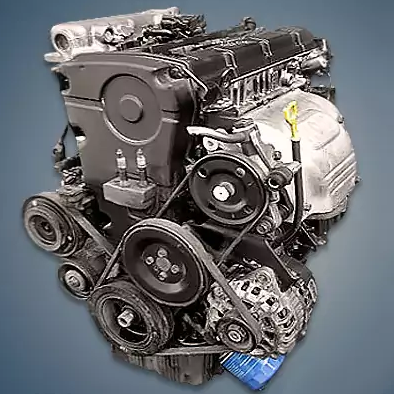
Sirius family: G4CR (1.6 L); G4CN, G4CM, G4JN (1.8 L); G4CP, G4JP (2.0 L); G4JS, G4CS (2.4 L).
The engine was mounted on:
- Hyundai Grandeur 1 (L) in 1986 – 1992; Grandeur 2 (LX) in 1992 – 1998;
- Hyundai Sonata 2 (Y2) in 1988 – 1991;
- Hyundai Starex 1 (A1) in 1997 – 2007.
Specifications
| Production years | 1986-2007 |
| Displacement, cc | 2351 |
| Fuel system | injector |
| Power output, hp | 110 – 120 |
| Torque output, Nm | 180 – 200 |
| Cylinder block | cast iron R4 |
| Block head | aluminum 8v |
| Cylinder bore, mm | 86.5 |
| Piston stroke, mm | 100 |
| Compression ratio | 8.5 – 8.6 |
| Features | no |
| Hydraulic lifters | yes |
| Timing drive | belt |
| Phase regulator | no |
| Turbocharging | no |
| Recommended engine oil | 10W-40 |
| Engine oil capacity, liter | 4.3 |
| Fuel type | petrol |
| Euro standards | EURO 1/2 |
| Fuel consumption, L/100 km (for Hyundai Starex 2003) — city — highway — combined |
16.8 9.9 12.7 |
| Engine lifespan, km | ~300 000 |
| Weight, kg | 159.7 (without attachments) |
Disadvantages of the Hyundai G4CS engine
The most well-known engine issue is the scarcity of timing belts and balancers.
The power unit’s supports are rapidly destroyed as a result of the balancer shafts’ vibration.
The resource of hydraulic lifters is significantly impacted by the use of inferior oils.
The exhaust manifold bursts at high mileage, but it can typically be welded.
Contamination of the throttle or idle speed controller is another common cause of floating speeds.