
Since the 2.4-liter Hyundai G4JS engine was merely a modification of the 16-valve 4G64 engine, it was built at a factory in South Korea between 1998 and 2007 under license from Mitsubishi. The Sorento SUV and the Santa Fe are two vehicles that use this Sirius II series motor.
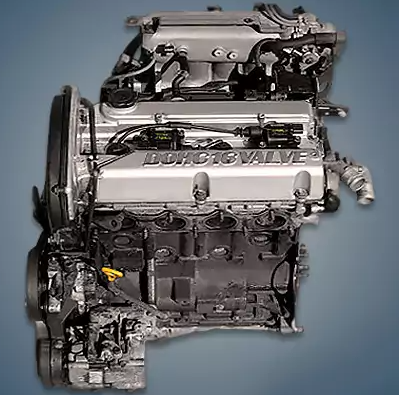
Hyundai replaced the 8-valve G4CS engine in 1998 with a 2.4-liter model that was structurally similar to the popular Mitsubishi 4G64 engine. This cast-iron cylinder block already has a 16-valve head with distributed fuel injection, hydraulic lifters, and a sophisticated timing belt drive and balancer block.
The upgraded power unit differs from the previous G4CS engine in a number of ways, including having its own crankshaft and camshafts, a slightly lighter connecting rod and piston group, a different thermostat, an oil pump, a water pump, sensors, and intake and exhaust manifolds.
Sirius family: G4CR (1.6 L); G4CN, G4CM, G4JN (1.8 L); G4CP, G4JP (2.0 L); G4JS, G4CS (2.4 L).
The engine was mounted on:
- Hyundai Santa Fe 1 (SM) in 2000 – 2006;
- Hyundai Sonata 4 (EF) in 1998 – 2005;
- Hyundai Starex 1 (A1) in 2001 – 2007;
- Kia Magentis 1 (GD) in 2000 – 2006;
- Kia Sorento 1 (BL) in 2002 – 2006.
Specifications
| Production years | 1998-2007 |
| Displacement, cc | 2351 |
| Fuel system | distributed injection |
| Power output, hp | 140 – 150 |
| Torque output, Nm | 190 – 210 |
| Cylinder block | cast iron R4 |
| Block head | aluminum 16v |
| Cylinder bore, mm | 86.5 |
| Piston stroke, mm | 100 |
| Compression ratio | 10.0 |
| Hydraulic lifters | yes |
| Timing drive | belt |
| Turbocharging | no |
| Recommended engine oil | 5W-30, 5W-40 |
| Engine oil capacity, liter | 4.5 |
| Fuel type | petrol |
| Euro standards | EURO 2/3 |
| Fuel consumption, L/100 km (for Hyundai Santa Fe 2003) — city — highway — combined |
13.0 7.9 9.8 |
| Engine lifespan, km | ~500 000 |
| Weight, kg | 154.2 (without attachments) |
Disadvantages of the Hyundai G4JS engine
This engine places a high demand on the oil’s quality and, more specifically, on how often it needs to be replaced. Any savings here could cause the balance shaft bearings to jam and break their belt, which would then fall under the timing belt and probably break it. All of this will culminate in the search for a replacement cylinder head in addition to the bending of the valves.
They frequently lament the power unit’s intense vibrations on specialized forums. Weak engine mounts as well as balancer liner wear could be the cause.
This engine’s hydraulic lifters are susceptible to lubricant quality, and after 50,000 kilometers, they may malfunction and begin to knock loudly.
The motor and thermostat on the Kia Sorento are positioned longitudinally and incorrectly, respectively.
Additionally, there are frequent lubricant leaks, electrical malfunctions, floating speeds brought on by contaminated idle speed controllers, crankshaft position sensors, camshaft position sensors, and misfire sensors that frequently malfunction, piston rings that frequently lie on long runs, and oil consumption.