
From 2005 to 2011, the Hyundai D4FA or 1.5 CRDi 1.5-liter diesel engine was manufactured and fitted to the company’s well-known Accent, Rio, Matrix, Getz, and Cerato models. There were variations of such a unit with lower power in addition to the standard version.
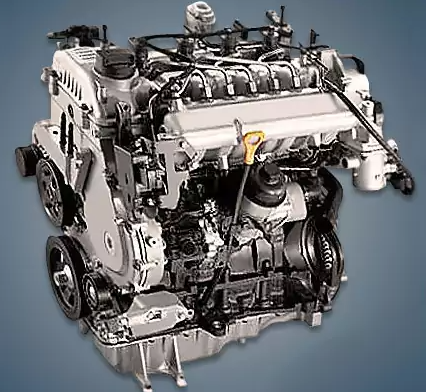
A 1.5-liter U-series diesel made its debut at the Hyundai Matrix at the very end of 2004. In addition to the Matrix, this EURO 3 unit was installed on the Kia Cerato in 2005 and 2006. The initial model, which had a 102 horsepower capacity, had a CR Bosch CRS1 with an injection pressure of 1350 bar. A EURO 4 engine with a Bosch CRS2 Common Rail system for 1600 bar first surfaced in 2005. It came with lower power versions in addition to the standard modification for 110 horsepower and 235 Nm. The Kia Rio had an engine with 79 horsepower and 170 Nm, while the Getz had an engine with 88 horsepower and 215 Nm.
With a Common Rail fuel system, a cast-iron block, an aluminum 16-valve cylinder head with hydraulic lifters, a timing chain, a Garrett GT1544V variable geometry turbine, and swirl flaps in the intake, this diesel engine is by design a classic for the era.
The engines D3FA, D4FB, D4FC, D4FD, and D4FE are also part of the Hyundai U family.
The engine was mounted on:
- Hyundai Getz 1 (TB) in 2005 – 2009;
- Hyundai Accent 3 (MC) in 2005 – 2010;
- Hyundai Matrix 1 (FC) in 2004 – 2010;
- Kia Rio 2 (JB) in 2005 – 2011;
- Kia Cerato 1 (LD) in 2005 – 2006.
Specifications
| Production years | 2005-2011 |
| Displacement, cc | 1493 |
| Fuel system | Common Rail |
| Power output, hp | 79 – 110 |
| Torque output, Nm | 170 – 235 |
| Cylinder block | cast iron R4 |
| Block head | aluminum 16v |
| Cylinder bore, mm | 75 |
| Piston stroke, mm | 84.5 |
| Compression ratio | 17.8 |
| Hydraulic lifters | yes |
| Timing drive | chain |
| Turbocharging | yes |
| Recommended engine oil | 0W-30, 5W-30 |
| Engine oil capacity, liter | 5.7 |
| Fuel type | diesel |
| Euro standards | EURO 3/4 |
| Fuel consumption, L/100 km (for Hyundai Accent 2008) — city — highway — combined |
5.6 4.0 4.6 |
| Engine lifespan, km | ~350 000 |
| Weight, kg | 157.1 |
Disadvantages of the Hyundai D4FA engine
A collector with swirl flaps, like the Swirl Control Valve, needs to be cleaned at least once every 50,000 kilometers because soot quickly overgrows it. Cleaning the EGR valve is also preferable.
Both the first and second versions of the Bosch Common Rail fuel system are dependable; banal wear frequently causes only the fuel pressure regulator on the rail to malfunction.
Even during the warranty period, many owners of cars with such a diesel engine replaced the timing drive, which consists of two roller chains with a resource of less than 100,000 kilometers.
Occasionally, the crankcase ventilation system’s burst membrane valve causes oil consumption. Here, it keeps the lubricant from entering the intake manifold by separating it from the crankcase gases.
Oil leaks from beneath the valve cover are another common issue with this power unit. Few electrical issues arise; frequently, the crankshaft position sensor is the only one that malfunctions.