
Since 2016, the company’s Korean plant has been assembling the 2.0-liter Hyundai G4NH engine, which is best known for the Kia Seltos. It is also installed in numerous markets, including Elantra, Kona, Tucson, and Soul. This device runs on the Atkinson cycle and is part of the line of particularly economical motors.
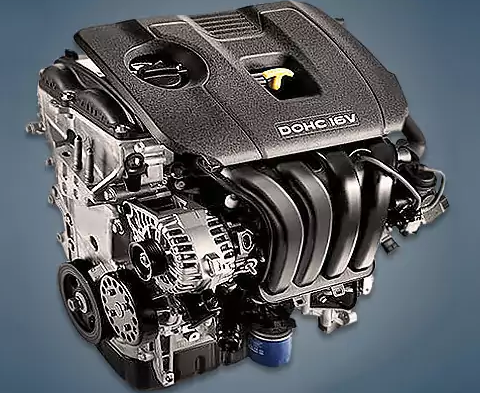
The engines in the Nu family are G4NB, G4NA, G4NC, G4ND, G4NE, G4NH, G4NG, G4NL, and G4NN.
The engine was mounted on:
- Hyundai Elantra 6 (AD) in 2017 – 2020;
- Hyundai Kona 1 (OS) since 2017;
- Hyundai Tucson 3 (TL) in 2017 – 2021;
- Hyundai Veloster 2 (JS) since 2018;
- Kia Cerato 4 (BD) since 2018;
- Kia Seltos 1 (SP2) since 2019;
- Kia Soul 3 (SK3) since 2019.
Specifications
| Production years | since 2016 |
| Displacement, cc | 1999 |
| Fuel system | distributed injection |
| Power output, hp | 149 |
| Torque output, Nm | 180 |
| Cylinder block | aluminum R4 |
| Block head | aluminum 16v |
| Cylinder bore, mm | 81 |
| Piston stroke, mm | 97 |
| Compression ratio | 12.5 |
| Features | DOHC |
| Hydraulic lifters | yes |
| Timing drive | chain |
| Phase regulator | yes |
| Turbocharging | no |
| Recommended engine oil | 5W-30 |
| Engine oil capacity, liter | 4.0 |
| Fuel type | petrol |
| Euro standards | EURO 5/6 |
| Fuel consumption, L/100 km (for Kia Seltos 2020) — city — highway — combined |
8.8 5.6 6.8 |
| Engine lifespan, km | ~250 000 |
| Weight, kg | 115 |
Disadvantages of the Hyundai G4NH engine
The majority of the unfavorable reviews thus far have been about electrical issues.
Additionally, there have been complaints about the motor overheating as a result of the electric thermostat failing.
Cases of an engine wedge following a decrease in the lubrication level are described in the specialized forums.
Scuffing is not an issue because the engine has oil nozzles.