
From 2000 to 2011, the 2.0-liter Hyundai G4GC engine was assembled at the Ulsan plant and fitted to the company’s well-known models, including the Sonata, Tucson, Kia Seed, Cerato, and Soul. This unit has an analog for L4GC gas fuel and is part of the updated Beta II line.
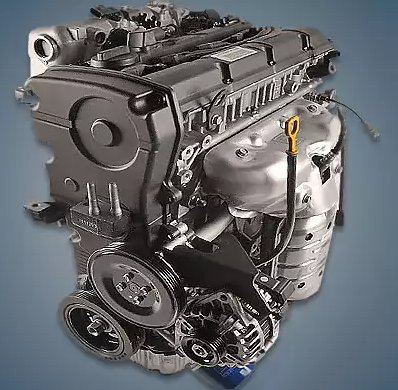
The Beta II family’s 2.0-liter engine made its debut on the third-generation Elantra in 2000. It was upgraded in 2003 with an intake camshaft dephaser. A cast-iron cylinder block, an aluminum 16-valve cylinder head without hydraulic lifters, and a combined timing drive—in which the crankshaft rotates the exhaust camshaft via a belt that is connected to the intake camshaft via a chain—make up the remainder of the engine design, which is fairly typical for the Beta series.
This also includes a traditional pressure and splash lubrication system, a closed-type liquid cooling system with forced circulation, and multiport fuel injection.
The engines in the Beta family are G4GR, G4GB, G4GM, G4GC, and G4GF.
The engine was mounted on:
- Hyundai Coupe 2 (GK) in 2002 – 2008;
- Hyundai Elantra 3 (XD) in 2000 – 2006; Elantra 4 (HD) in 2006 – 2011;
- Hyundai i30 1 (FD) in 2007 – 2010;
- Hyundai Sonata 4 (EF) in 2006 – 2011;
- Hyundai Trajet 1 (FO) in 2004 – 2008;
- Hyundai Tucson 1 (JM) in 2004 – 2010;
- Kia Carens 2 (FJ) in 2004 – 2006;
- Kia Ceed 1 (ED) in 2006 – 2010;
- Kia Cerato 1 (LD) in 2003 – 2008;
- Kia ProCeed 1 (ED) in 2007 – 2010;
- Kia Soul 1 (AM) in 2008 – 2011;
- Kia Sportage 2 (KM) in 2004 – 2010.
Specifications
| Production years | 2000-2011 |
| Displacement, cc | 1975 |
| Fuel system | distributed injection |
| Power output, hp | 136 – 143 |
| Torque output, Nm | 179 – 186 |
| Cylinder block | cast iron R4 |
| Block head | aluminum 16v |
| Cylinder bore, mm | 82 |
| Piston stroke, mm | 93.5 |
| Compression ratio | 10.1 |
| Hydraulic lifters | no |
| Timing drive | chain & belt |
| Phase regulator | yes |
| Turbocharging | no |
| Recommended engine oil | 5W-30, 5W-40 |
| Engine oil capacity, liter | 4.5 |
| Fuel type | petrol |
| Euro standards | EURO 3/4 |
| Fuel consumption, L/100 km (for Hyundai Tucson 2005) — city — highway — combined |
10.4 6.6 8.0 |
| Engine lifespan, km | ~500 000 |
| Weight, kg | 144 |
Disadvantages of the Hyundai G4GC engine
This power unit is incredibly dependable, long-lasting, and free of major defects. One of its weaknesses could be a rather erratic ignition system. The engine’s unstable operation and how to fix issues after replacing the ignition coil or its high-voltage wires are among the many topics covered in the specialized forums.
Beta series motors have very strict requirements for the lubricant’s quality and replacement process. As a result, saving frequently results in phase regulator failure up to 100,000 kilometers, and using highly liquid oils for extended runs also causes the liners to rotate.
According to the manufacturer’s official data, the belt that connects the crankshaft to the exhaust camshaft in these engines has a resource of roughly 90,000 kilometers. However, because the valves bend when it breaks, dealers take precautions and replace it every 60,000 kilometers.
Additionally, the owners bemoan the unit’s noisy and occasionally difficult operation, its limited attachment resources, and computer and temperature sensor malfunctions.