
Since 2007, a variety of commercial vehicles, including Starex minibuses, have been equipped with the 2.4-liter Hyundai G4KG or Grand Starex 2.4 gasoline engine. This unit is available in a gas version with a 159 horsepower capacity under the index L4KB or 2.4 LPi.
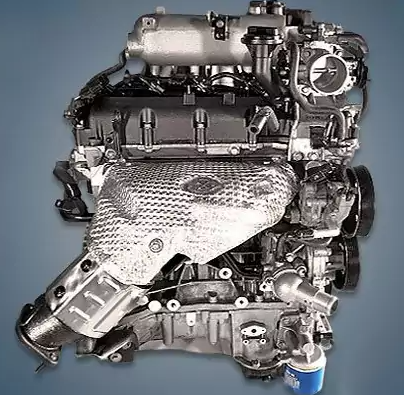
The 2.4-liter engine for rear-wheel drive models that debuted in the Theta I line in 2007 was different from a comparable unit with the G4KC index in that it lacked a block of balancers. The remainder of the design is the same: a timing chain drive, an inlet dephaser, a 16-valve head without hydraulic lifters, and an aluminum cylinder block with cast-iron liners. Additionally, the G4KG motor lacks a geometry change system and has a different intake manifold.
This engine is frequently modified with the index L4KB or 2.4 LPi, which is intended to run on liquefied gas. With this modification, the power has been slightly reduced to 159 horsepower.
G4KC, G4KE, G4KG, G4KJ, and G4KK are members of the Theta 2.4L family.
The engine was mounted on:
- Hyundai Starex 2 (TQ) since 2007.
Specifications
| Production years | since 2007 |
| Displacement, cc | 2359 |
| Fuel system | distributed injection |
| Power output, hp | 170 – 175 |
| Torque output, Nm | 225 – 230 |
| Cylinder block | aluminum R4 |
| Block head | aluminum 16v |
| Cylinder bore, mm | 88 |
| Piston stroke, mm | 97 |
| Compression ratio | 10.5 |
| Hydraulic lifters | no |
| Timing drive | chain |
| Phase regulator | yes |
| Turbocharging | no |
| Recommended engine oil | 5W-30, 5W-40 |
| Engine oil capacity, liter | 5.1 |
| Fuel type | petrol |
| Euro standards | EURO 4/5 |
| Fuel consumption, L/100 km (for Hyundai Grand Starex 2010) — city — highway — combined |
14.4 9.6 11.4 |
| Engine lifespan, km | ~400 000 |
| Weight, kg | 130.9 |
Disadvantages of the Hyundai G4KG engine
The cylinders are frequently scuffed, but the oil pump is straightforward and lacks balancers, so the liners do not rotate as frequently. Ceramic dust that enters the combustion chambers from the collector is thought to be the cause of their appearance in auto services.
The appearance of a strong oil burner can be caused by an ellipse of cast-iron liners, critical wear, and scuffs in the cylinders. The aluminum block with an open cooling jacket just leads over time and does a very poor job of holding the geometry.
Although the manufacturer claims that timing chains require no maintenance, in reality, their resource is limited to 200,000 kilometers, and occasionally they stretch even further. The phase regulator also needs to be changed around the same time.
The unit’s short-lived gaskets and seals are another weakness. Grease typically seeps out through the crankshaft oil seals or beneath the valve covers.