
The Japanese company produced the 1.5-liter Mitsubishi 4G15 engine from 1985 until 2012. After that, it was assembled in China, where it is still found in many regional models.
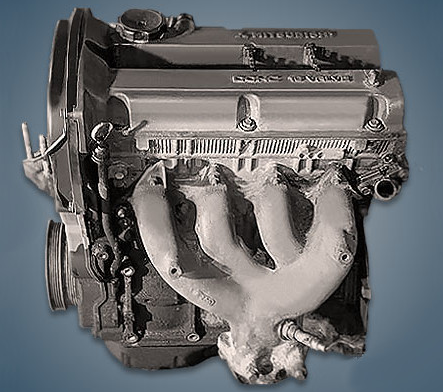
In the middle of the 1980s, the Orion 4G15 made its debut on the Mirage line of vehicles. The motor had a timing belt, an aluminum cylinder head without hydraulic lifters, and a cast-iron block. The initial models had an 8-valve SOHC block head and a carburetor. Later, 12-valve versions with ECI-MULTI multiport fuel injection were introduced. After 2000, internal combustion engines were fitted with hydraulic lifters and a MIVEC intake phase regulator. The most sophisticated versions of this 1.5-liter engine featured a 16-valve DOHC head. Additionally, a supercharged 4G15T unit and GDI direct injection were part of a rare modification.
The engines 4G13, 4G15T, 4G18, and 4G19 are also part of the 4G1 family.
The engine was mounted on:
- Mitsubishi Colt 2 (C1), Colt 3 (C5), Colt 4 (CA), Colt 5 (CJ) in 1985 – 2003;
- Mitsubishi Lancer 6 (C6), Lancer 7 (CB), Lancer 8 (CK), Lancer 9 (CS) in 1988 – 2010;
- Mitsubishi Dingo 1 (CQ) in 1998 – 2003;
- Proton Arena 1 in 2002 – 2009;
- Proton Saga 1 in 1985 – 2008;
- Proton Satria 1 in 1994 – 2005;
- Proton Wira 1 in 1993 – 2009;
- Hyundai Excel 1 (X1), Excel 2 (X2) in 1985 – 1995.
Specifications
| Production years | 1985-2012 |
| Displacement, cc | 1468 |
| Fuel system | carburetor (G15B Carburetor SOHC 8v) distributed injection (4G15 ECI-multi SOHC 12v) distributed injection (4G15 ECI-multi DOHC 16v) direct injection (4G15 GDI DOHC 16v) |
| Power output, hp | 70 – 73 (Carburetor SOHC 8v) 80 – 95 (ECI-multi SOHC 12v) 97 – 110 (ECI-multi DOHC 16v) 105 (GDI DOHC 16v) |
| Torque output, Nm | 110 – 115 (Carburetor SOHC 8v) 115 – 125 (ECI-multi SOHC 12v) 130 – 140 (ECI-multi DOHC 16v) 140 (GDI DOHC 16v) |
| Cylinder block | cast iron R4 |
| Block head | aluminum 8v (Carburetor SOHC 8v) aluminum 12v (ECI-multi SOHC 12v) aluminum 16v (ECI-multi DOHC 16v) aluminum 16v (GDI DOHC 16v) |
| Cylinder bore, mm | 75.5 |
| Piston stroke, mm | 82 |
| Compression ratio | 9.0 (Carburetor SOHC 8v) 9.4 (ECI-multi SOHC 12v) 9.5 (ECI-multi DOHC 16v) 11.0 (GDI DOHC 16v) |
| Timing drive | belt |
| Recommended engine oil | 5W-30, 5W-40 |
| Engine oil capacity, liter | 3.6 |
| Fuel type | petrol |
| Euro standards | EURO 1 (Carburetor SOHC 8v) EURO 2/3 (ECI-multi SOHC 12v) EURO 3/4 (ECI-multi DOHC 16v) EURO 4 (GDI DOHC 16v) |
| Fuel consumption, L/100 km (for Mitsubishi Lancer 1995) — city — highway — combined |
9.4 5.9 7.5 |
| Engine lifespan, km | ~300 000 |
| Weight, kg | 133 (with attachments) |
Disadvantages of the Mitsubishi 4G15 engine
Throttle wear, which manifests as higher or, more frequently, floating idle speeds, is the characteristic issue of the Orion engine family. Additionally, remanufactured dampers for these units are sold simultaneously by multiple organizations.
At 100,000 kilometers, thin oil scraper rings typically show signs of oil consumption. After 200,000 kilometers, piston wear frequently occurs and a major overhaul is necessary. Sometimes decoking is sufficient to eliminate the oil burner, and other times a straightforward ring replacement is sufficient.
The timing belt is supposed to change every 90,000 kilometers, but it can burst earlier, which frequently results in cracked pistons and bent valves.
They frequently lament a short-lived catalyst, a shoddy rear support, an unreliable ignition system, and the fact that candles flood when they start in cold weather in specialized forums. Additionally, remember to adjust the valves because units manufactured prior to 2000 lack hydraulic lifters.