
The 1.6-liter Mitsubishi 4G18 gasoline engine was manufactured in Japan between 1998 and 2012. After that, its assembly was moved to China, where it is installed on a number of regional models.
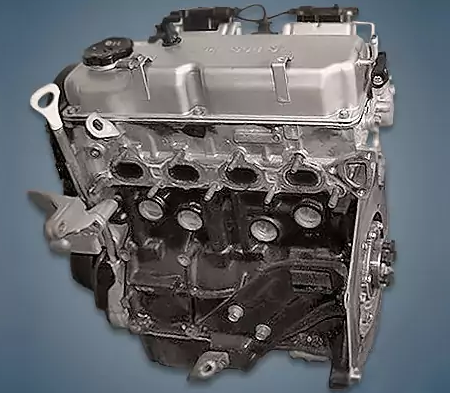
The Orion 4G1 family’s largest member is 4G18. It was built on the same cylinder block as the 4G13 and 4G15, but it has a piston block bore of 76 mm and a long-stroke crankshaft (stroke 87.3 mm as opposed to 82 mm for earlier models). Other than that, the 4G18 has no advanced systems and is just as basic a motor as other 4G1 family members.
The engines 4G13, 4G15, 4G15T, and 4G19 are also part of the 4G1 family.
The engine was mounted on:
- Mitsubishi Lancer 9 (CS) in 2000 – 2010;
- Mitsubishi Space Star 1 (DG) in 1998 – 2005;
- Proton Waja 1 in 2000 – 2011;
- Tagaz Aquila 1 in 2013 – 2014.
Specifications
| Production years | 1998-2012 |
| Displacement, cc | 1584 |
| Fuel system | distributed injection |
| Power output, hp | 98 – 112 |
| Torque output, Nm | 145 – 150 |
| Cylinder block | cast iron R4 |
| Block head | aluminum 16v |
| Cylinder bore, mm | 76 |
| Piston stroke, mm | 87.3 |
| Compression ratio | 9.5 – 10.0 |
| Features | SOHC |
| Hydraulic lifters | yes |
| Timing drive | belt |
| Turbocharging | no |
| Recommended engine oil | 5W-30, 5W-40 |
| Engine oil capacity, liter | 3.6 |
| Fuel type | petrol |
| Euro standards | EURO 4/5 |
| Fuel consumption, L/100 km (for Mitsubishi Lancer 2005) — city — highway — combined |
8.8 5.5 6.7 |
| Engine lifespan, km | ~300 000 |
| Weight, kg | 135 (with attachments) |
Disadvantages of the Mitsubishi 4G18 engine
Due to oil scraper rings, which can appear after 100,000 kilometers, the majority of complaints from car owners with such a power unit are related to an oil burner. An inadequate engine cooling system is the primary offender.
The throttle valve wear issue, which is branded for the series, was not resolved by this motor. Similar to other Orion models, the damper’s powerful backlash causes the speed to start floating after 100,000 kilometers. It’s also beneficial that there are several other options.
The timing belt is supposed to be changed after 90,000 kilometers, according to the manufacturer’s official regulations, but it frequently breaks earlier, with disastrous results for the vehicles. Both bent valves and cracked pistons have been reported on specialized forums.
Low resource consumption is a distinguishing feature of the ignition system’s components, particularly the coils. This power unit also enjoys filling candles during severe frosts. The catalyst, EGR valve, and engine mounts are among its weaknesses.