
Between 1982 and 1987, the company assembled the 1.6-liter 8-valve Mazda F6 engine in Japan and mounted it on the base modifications of the 626 model in the rear of the GC and pickup truck with the B1600 index. Only the version with an 8-valve head and carburetor has this power unit.
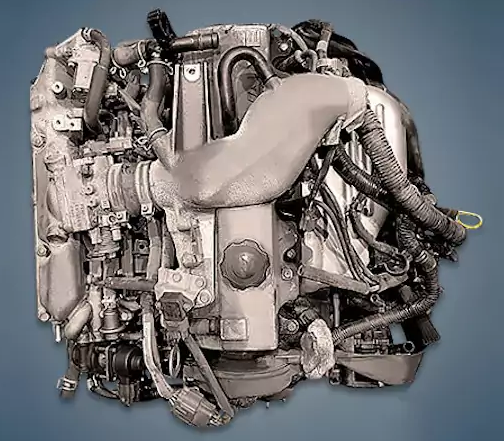
F6, FP, FP-DE, F8, FE, FE-DE, FE3N, FS, FS-DE, FS-ZE, and F2 are all members of the F-engine family.
The engine was mounted on:
- Mazda 626 GC in 1982 – 1987;
- Mazda B-series UD in 1983 – 1985.
Specifications
| Production years | 1982-1987 |
| Displacement, cc | 1587 |
| Fuel system | carburetor |
| Power output, hp | 72 – 82 |
| Torque output, Nm | 120 |
| Cylinder block | cast iron R4 |
| Block head | aluminum 8v |
| Cylinder bore, mm | 81 |
| Piston stroke, mm | 77 |
| Compression ratio | 8.6 |
| Features | SOHC |
| Hydraulic lifters | no |
| Timing drive | belt |
| Phase regulator | no |
| Turbocharging | no |
| Recommended engine oil | 5W-30 |
| Engine oil capacity, liter | 3.9 |
| Fuel type | petrol |
| Euro standards | EURO 0 |
| Fuel consumption, L/100 km (for Mazda 626 1985) — city — highway — combined |
10.1 6.7 8.2 |
| Engine lifespan, km | ~250 000 |
| Weight, kg | 152.9 |
Disadvantages of the Mazda F6 1.6l engine
A car may use a lot of fuel if the carburetor is not properly adjusted.
Additionally, a lot of this engine’s issues are related to ignition system malfunctions.
Stuck rings are a common cause of an oil burner after 200,000 kilometers of operation.
The timing belt resource is about 60,000 kilometers long, but the valves do not bend when it breaks.
This place lacks hydraulic lifters, and the valves need to be adjusted every 100,000 kilometers.