
Both the atmospheric RF-N and the turbocharged RF-T versions of the Mazda RF 2.0-liter pre-chamber diesel engine were produced between 1983 and 2003. Additionally, there was a compressor RF-CX for the 626 and an upgraded RF1G for the 323 models.
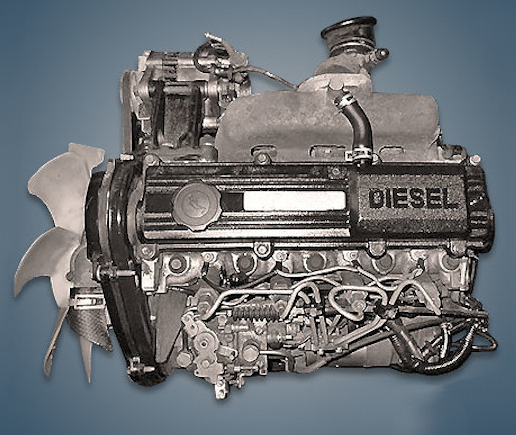
RF-T Di and R2 diesel engines are also members of the R-engine family.
The engine was mounted on:
- Mazda 323 BH in 1995 – 1998;
- Mazda 323 BJ in 1998 – 2000;
- Mazda 626 GC in 1983 – 1987;
- Mazda 626 GD in 1987 – 1991;
- Mazda 626 GE in 1991 – 1997;
- Mazda Bongo 3 in 1984 – 1995;
- Kia Concord in 1988 – 1991;
- Kia Sportage 1 (JA) in 1998 – 2003;
- Suzuki Vitara 1 (ET) in 1994 – 1998;
- Suzuki Vitara GT in 1998 – 2003.
Specifications
| Production years | 1983-2003 |
| Displacement, cc | 1998 |
| Fuel system | prechambers |
| Power output, hp | 58 – 67 (RF-N, RF46) 71 (RF1G) 76 – 88 (RF-CX) 71 – 92 (RF-T) |
| Torque output, Nm | 120 (RF-N, RF46) 128 (RF1G) 172 – 186 (RF-CX) 172 – 195 (RF-T) |
| Cylinder block | cast iron R4 |
| Block head | aluminum 8v |
| Cylinder bore, mm | 86 |
| Piston stroke, mm | 86 |
| Compression ratio | 21 – 23 (RF-N, RF46) 21.7 (RF1G) 21.1 (RF-CX) 19 – 21 (RF-T) |
| Features | SOHC |
| Hydraulic lifters | no |
| Timing drive | belt |
| Phase regulator | no |
| Turbocharging | no (RF-N, RF46) no (RF1G) compressor (RF-CX) yes (RF-T) |
| Recommended engine oil | 5W-30 |
| Engine oil capacity, liter | 5.0 (RF-N, RF46) 5.0 (RF1G) 5.5 (RF-CX) 5.5 (RF-T) |
| Fuel type | diesel |
| Euro standards | EURO 0 (RF-N, RF46) EURO 2 (RF1G) EURO 1 (RF-CX) EURO 1/2 (RF-T) |
| Fuel consumption, L/100 km (for Mazda 626 1990) — city — highway — combined |
8.1 5.4 6.3 |
| Engine lifespan, km | ~300 000 |
| Weight, kg | 187 |
Disadvantages of the Mazda RF 2.0 engine
The majority of the issues with these straightforward and dependable diesel engines are caused by aging;
The unit sweats oil over the cylinder head gasket, and leaks are most frequently discussed on specialized forums;
Regulations state that the timing belt must be replaced every 60,000 kilometers or the valve will bend if it breaks;
Cracks around the prechambers are frequently discovered after 200–250 thousand kilometers of operation; hydraulic lifters are absent, and valve adjustments should be made every 100,000 kilometers.