
From 1991 to 1997, the company’s Japanese plant produced the 2.0-liter Mazda FS engine, which was used in the Asian Capella, Cronos, and Efini models as well as the European 626 GE. The new 626 GF model was equipped with an updated motor that already had the FS-DE index.
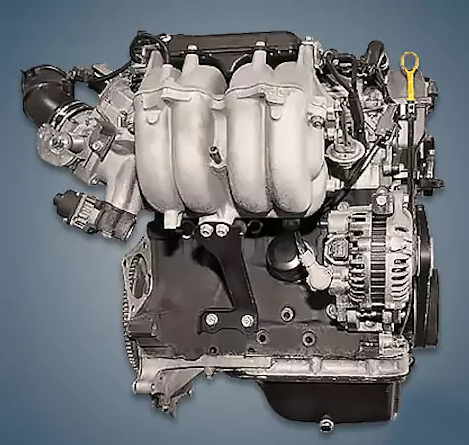
F6, FP, FP-DE, F8, FE, FE-DE, FE3N, FS, FS-DE, FS-ZE, and F2 are all members of the F-engine family.
The engine was mounted on:
- Mazda 626 GE in 1991 – 1997;
- Mazda Autozam Clef GE in 1992 – 1994;
- Mazda Capella CG in 1994 – 1997;
- Mazda Cronos GE in 1991 – 1995;
- Mazda Efini MS-6 GE in 1991 – 1994;
- Mazda MX-6 GE in 1991 – 1997.
Specifications
| Production years | 1991-1997 |
| Displacement, cc | 1991 |
| Fuel system | distributed injection |
| Power output, hp | 115 – 130 |
| Torque output, Nm | 170 – 175 |
| Cylinder block | cast iron R4 |
| Block head | aluminum 16v |
| Cylinder bore, mm | 83 |
| Piston stroke, mm | 92 |
| Compression ratio | 9.0 – 9.5 |
| Features | DOHC |
| Hydraulic lifters | yes |
| Timing drive | belt |
| Phase regulator | no |
| Turbocharging | no |
| Recommended engine oil | 5W-30 |
| Engine oil capacity, liter | 3.5 |
| Fuel type | petrol |
| Euro standards | EURO 2 |
| Fuel consumption, L/100 km (for Mazda 626 1993) — city — highway — combined |
10.8 6.5 8.4 |
| Engine lifespan, km | ~375 000 |
| Weight, kg | 136.3 |
Disadvantages of the Mazda FS 2.0l engine
Low-quality oil cannot be used with this entirely dependable power unit;
Hydraulic lifters start to knock even before 50,000 kilometers due to subpar lubrication;
The timing belt changes roughly every 60,000 kilometers, but if it breaks, the valves won’t bend. Next, oil scraper rings typically lie here and lubricant consumption appears.
The ignition system’s whims account for a significant portion of the remaining issues.