
Based on the three-liter M104 E30, the final large civilian in-line six-cylinder Mercedes M104 E32 engine (apart from the sports M104 E34 AMG and M104 E36 AMG) debuted in 1991.
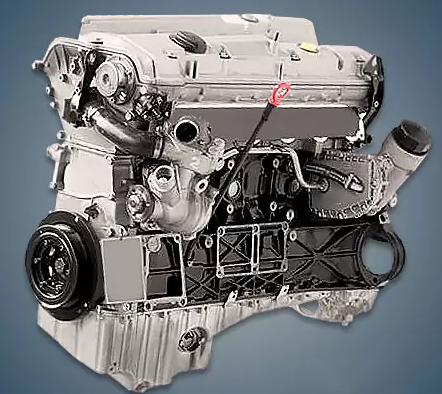
M103 E26, M103 E30, M104 E28, M104 E30, M104 E32, and M256 E30 are members of the R6-family.
The cylinder block, which has a crankshaft with a piston stroke increased to 84 mm and a cylinder diameter increased to 89.9 mm, is the primary distinction between the M104 E30 and the M104 E32.
M104 E30 cylinder head, each cylinder having four valves. Distributed injection is a fuel injection system. The M104 E32 started to have an intake manifold with variable geometry installed in 1992.
The new M104 uses a double-row timing chain, which has a far longer service life, in place of the 103rd engine’s single-row, unreliable timing chain.
Specifications
| Production years | 1991-1998 |
| Displacement, cc | 3199 |
| Fuel system | injector |
| Power output, hp | 220 – 230 |
| Torque output, Nm | 310 – 315 |
| Cylinder block | cast iron R6 |
| Block head | aluminum 24v |
| Cylinder bore, mm | 89.9 |
| Piston stroke, mm | 84 |
| Compression ratio | 9.2 – 10.0 |
| Features | no |
| Hydraulic lifters | yes |
| Timing drive | chain |
| Phase regulator | at the intake |
| Turbocharging | no |
| Recommended engine oil | 5W-40 |
| Engine oil capacity, liter | 7.0 |
| Fuel type | petrol |
| Euro standards | EURO 1/2 |
| Fuel consumption, L/100 km (for Mercedes E320 1994) — city — highway — combined |
14.7 8.2 11.0 |
| Engine lifespan, km | ~500 000 |
| Weight, kg | 195 |
Disadvantages of the M104 E32 engine
The main problem with these power units is numerous oil leaks.
First, there are leaks in the cylinder head, U-shaped gaskets, and oil filter heat exchanger.
The engine is seriously endangered when the fan’s viscous coupling fails.
This motor’s severe fear of overheating causes the cylinder head to bend almost immediately.
You will have a lot of problems with under-hood wiring and ignition coils.