
From 2012 to 2015, the Ford R9DA or 2.0 EcoBoost 250, a 2.0-liter turbocharged engine, was manufactured and installed on a specially charged version of the well-liked Focus model under the ST index. This unit was replaced with a similar but slightly altered motor after restyling.
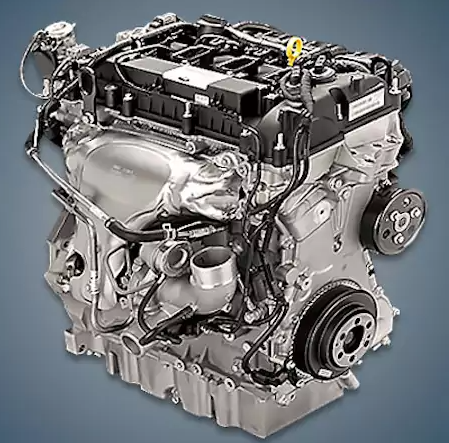
Internal combustion engines TPBA, TNBB, and TPWA are also part of the 2.0 EcoBoost line.
The engine was installed on:
- Ford Focus Mk3 ST in 2012 – 2015.
Specifications
| Production years | 2012-2015 |
| Displacement, cc | 1999 |
| Fuel system | direct injection |
| Power output, hp | 249 |
| Torque output, Nm | 360 |
| Cylinder block | aluminum R4 |
| Block head | aluminum 16v |
| Cylinder bore, mm | 87.5 |
| Piston stroke, mm | 83.1 |
| Compression ratio | 9.3 |
| Features | no |
| Hydraulic lifters | no |
| Timing drive | chain |
| Phase regulator | Ti-VCT |
| Turbocharging | yes |
| Recommended engine oil | 5W-20 |
| Engine oil capacity, liter | 5.6 |
| Fuel type | petrol |
| Euro standards | EURO 5 |
| Fuel consumption, L/100 km (for Ford Focus ST 2014) — city — highway — combined |
9.9 5.6 7.2 |
| Engine lifespan, km | ~200 000 |
Disadvantages of the R9DA engine
Ford Focuses that are charged are uncommon, and little is known about their malfunctions.
The quality of the fuel and oil used in this engine is very important.
Consequently, the fuel system components’ failure is the primary source of complaints.