
Produced from 1995 to 2002, the 1.3-liter Ford Fiesta 1.3 JJA gasoline engine was limited to the most basic versions of the renowned Fiesta model’s fourth generation. A slightly more potent version of this power unit with a J4C index was also available.
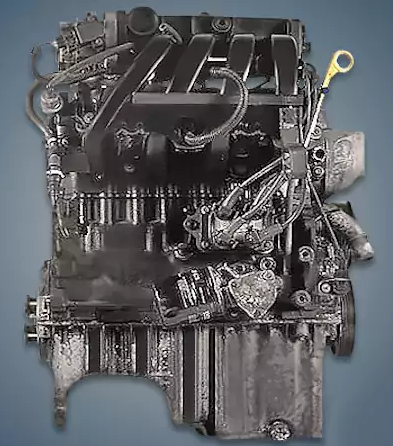
Internal combustion engines (J4D) are also part of the Endura-E series.
The engine was installed on:
- Ford Fiesta Mk4 in 1995 – 2002.
Specifications
| Production years | 1995-2002 |
| Displacement, cc | 1299 |
| Fuel system | injector |
| Power output, hp | 50 |
| Torque output, Nm | 84 |
| Cylinder block | cast iron R4 |
| Block head | cast iron 8v |
| Cylinder bore, mm | 74 |
| Piston stroke, mm | 75.5 |
| Compression ratio | 9.5 |
| Features | OHV |
| Hydraulic lifters | no |
| Timing drive | chain |
| Phase regulator | no |
| Turbocharging | no |
| Recommended engine oil | 5W-30 |
| Engine oil capacity, liter | 3.25 |
| Fuel type | petrol |
| Euro standards | EURO 2/3 |
| Fuel consumption, L/100 km (for Ford Fiesta 1999) — city — highway — combined |
8.6 5.7 6.8 |
| Engine lifespan, km | ~220 000 |
Disadvantages of the Ford JJA engine
These motors frequently need to be overhauled after 150,000 kilometers and are renowned for their limited resources.
Oil consumption is the primary indicator of cylinder-piston group wear.
Valve adjustment is necessary every 30,000 kilometers because there are no hydraulic lifters.
You will need to replace the camshaft if you drive for an extended period of time without adjusting the valves.
The remaining issues are typically related to one or more sensors failing.