
One of the newest members of the large family of M112 engines, the M112 E26 was designed for Mercedes models with an index of 240 and debuted in 2000 as a replacement for the M112 E24.
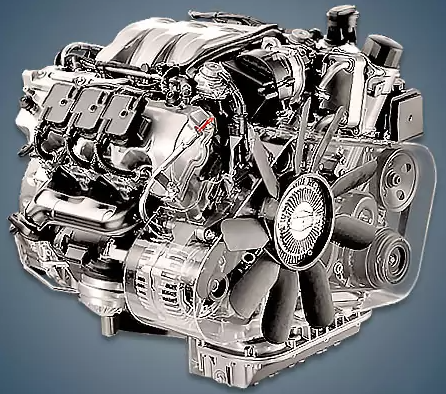
M112 E24, M112 E26, M112 E28, M112 E32, M112 E37, M272 E25, M272 E30, M272 E35, M276 DE30, and M276 DE35 are all members of the V6-family.
A crankshaft with an even smaller piston stroke was installed in the engine’s cylinder block, which is based on the M112 E28. Similar to the M112 E28, the cylinder heads are made of aluminum, have a single camshaft (SOHC), and each cylinder has two intake and one exhaust valve. The exhaust valves are 41 mm in diameter, while the intake valves are 36 mm. Hydraulic lifters, a variable-length intake manifold, and a variable valve timing system are all present.
Specifications
| Production years | 2000-2006 |
| Displacement, cc | 2597 |
| Fuel system | distributed injection |
| Power output, hp | 170 – 177 |
| Torque output, Nm | 240 |
| Cylinder block | aluminum V6 |
| Block head | aluminum 18v |
| Cylinder bore, mm | 89.9 |
| Piston stroke, mm | 68.2 |
| Compression ratio | 11.0 |
| Features | no |
| Hydraulic lifters | yes |
| Timing drive | chain |
| Phase regulator | yes |
| Turbocharging | no |
| Recommended engine oil | 5W-30 |
| Engine oil capacity, liter | 7.5 |
| Fuel type | petrol |
| Euro standards | EURO 3/4 |
| Fuel consumption, L/100 km (for E240 W211) — city — highway — combined |
15.4 7.4 10.5 |
| Engine lifespan, km | ~300 000 |
| Weight, kg | 160 |
Disadvantages of the M112 E26 engine
The crankshaft pulley’s destruction is the engine series’ hallmark failure.
Increased oil consumption is somehow connected to the remaining engine issues.
Grease seeps out from under the gaskets and seals as a result of crankcase ventilation contamination.
Here, hardened valve stem seals are typically the primary source of oil burnout.
The heat exchanger and oil filter housing are also potential sources of lubrication leaks.