
Originally unveiled in 2009 as a joint development of two Japanese companies, the Subaru FA20D 2.0-liter gasoline engine entered production in 2012. This motor is installed on a sports model called the Toyota GT86 or Subaru BRZ.
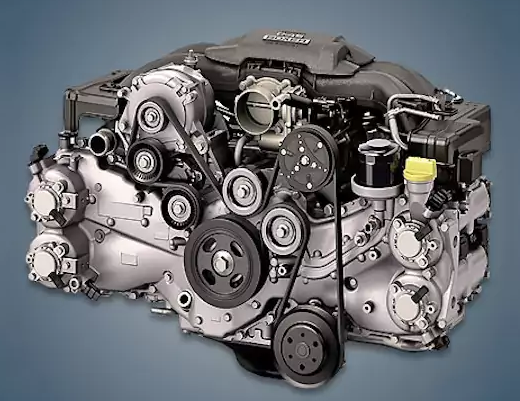
Since 2012, the company has been producing the 2.0-liter Subaru FA20F or FA20DIT turbo engine, which is fitted to charged versions of the company’s popular models, including the Forester XT and Impreza WRX. This power unit has a 250–300 horsepower capacity and can be modified in numerous ways.
FA20, FA24F, and FA24D are members of the FA family.
The FA20D was set up on:
- Subaru BRZ 1 (ZC) in 2012 – 2021;
- Toyota GT86 1 (ZN6) in 2012 – 2021 (as 4U-GSE);
- Scion FR-S 1 (ZN6) in 2012 – 2016 (as 4U-GSE).
The FA20F/FA20DIT was installed on:
- Subaru Forester 4 (SJ) in 2013 – 2018;
- Subaru Legacy 5 (BM) in 2012 – 2014;
- Subaru Legacy 6 (BN) in 2014 – 2019;
- Subaru Levorg 1 (VM) in 2014 – 2020;
- Subaru WRX 1 (VA) in 2014 – 2021.
Specifications
| Start of production | 2012 |
| Displacement, cc | 1998 |
| Fuel system | direct injection |
| Power output, hp | 200 (FA20D) 250 – 300 (FA20F) |
| Torque output, Nm | 205 (FA20D) 350 – 400 (FA20F) |
| Cylinder block | aluminum H4 |
| Block head | aluminum 16v |
| Cylinder bore, mm | 86 |
| Piston stroke, mm | 86 |
| Compression ratio | 12.5 (FA20D) 10.6 (FA20F) |
| Features | DOHC (FA20D) DOHC, intercooler (FA20F) |
| Hydraulic lifters | no |
| Timing drive | chain |
| Phase regulator | Dual AVCS |
| Turbocharging | no (FA20D) twin-scroll (FA20F) |
| Recommended engine oil | 0W-20 (FA20D) 5W-30 (FA20F) |
| Engine oil capacity, liter | 6.3 (FA20D) 5.1 (FA20F) |
| Fuel type | petrol |
| Euro standards | EURO 5 |
| Fuel consumption, L/100 km (for Subaru BRZ 2015) — city — highway — combined |
10.4 6.4 7.8 |
| Engine lifespan, km | ~230 000 |
| Weight, kg | 170 (FA20D) 185 (FA20F) |
Disadvantages of the FA20 engine
These devices were initially trembling at low speeds, but the firmware fixed everything;
Then, complaints about faulty gears, sensors, and bearings surfaced.
Additionally, this engine is very sensitive to lubricant and fuel quality;
Here, dual AVCS phase regulators rapidly fail due to non-original oil;
Keep an eye on the system’s lubrication level because the liners rotate frequently.