
The best engine in the record book is the VQ30DE engine, or simply VQ30. He was among the top ten engines for six years. This outcome has not been attained by any other engine. The engine has a new engine cooling system, a digital knock control system, and the best camshaft and crankshaft processing.
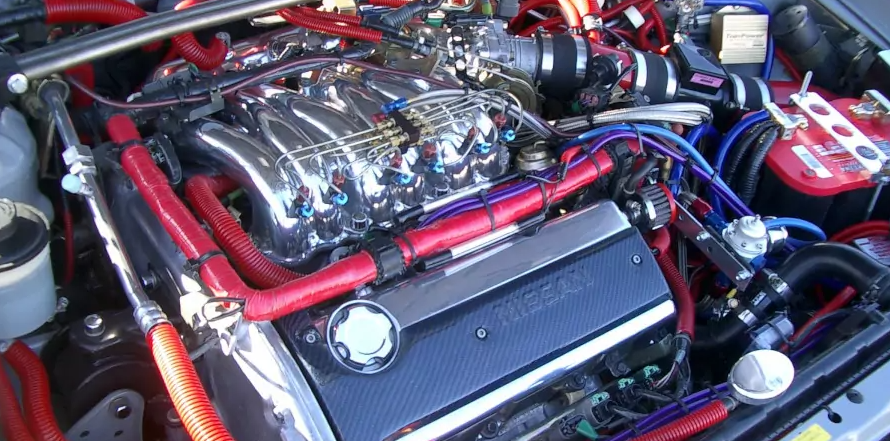
The flagship of the VQ lineup, the 3.0-liter Nissan VQ30DE engine, debuted in 1994. They installed this power unit on a number of the company’s well-known models. The VQ30DEK index, an upgraded and more potent version of this motor, debuted in 2000.
Internal combustion engines VQ30DET, VQ30DD, VQ35DE, VQ35DD, VQ35HR, and VQ37VHR are also part of the VQ30 series.
The engine was mounted on:
- Nissan Bassara 1 (JU30) in 1999 – 2003;
- Nissan Cedric 9 (Y33) in 1995 – 1999;
- Nissan Cefiro 2 (A32) in 1994 – 2000; Cefiro 3 (A33) in 1998 – 2004;
- Nissan Gloria 10 (Y33) in 1995 – 1999;
- Nissan Maxima 4 (A32) in 1994 – 2000; Maxima 5 (A33) in 1999 – 2006;
- Nissan Presage 1 (U30) in 1998 – 2003;
- Infiniti I30 1 (A32) in 1995 – 1999; I30 2 (A33) in 1999 – 2001;
- Samsung SM5 1 (A32) in 1998 – 2005.
Specifications
| Production years | 1994-2007 |
| Displacement, cc | 2987 |
| Fuel system | distributed injection |
| Power output, hp | 190 – 220 (1994 version) 220 – 230 (2000 VQ30DE-K version) |
| Torque output, Nm | 270 – 280 (1994 version) 290 – 300 (2000 VQ30DE-K version) |
| Cylinder block | aluminum V6 |
| Block head | aluminum 24v |
| Cylinder bore, mm | 93 |
| Piston stroke, mm | 73.3 |
| Compression ratio | 10 |
| Features | ECCS, NDIS |
| Hydraulic lifters | no |
| Timing drive | three chains |
| Phase regulator | no |
| Turbocharging | no |
| Recommended engine oil | 5W-30 |
| Engine oil capacity, liter | 4.0 |
| Fuel type | petrol |
| Euro standards | EURO 2/3 (1994 version) EURO 4/5 (2000 VQ30DE-K version) |
| Fuel consumption, L/100 km (for Nissan Cefiro 2000) — city — highway — combined |
15.1 7.8 10.5 |
| Engine lifespan, km | ~350 000 |
| Weight, kg | 190 |
Disadvantages of the VQ30DE engine
The majority of issues with internal combustion engines are caused by catalyst crumbs that are drawn into the cylinders; they scratch the combustion chamber walls and then cause a severe oil burn.
Overheating of the motor frequently results in warping of the cylinder head’s mating surfaces;
Floating speed is frequently caused by a dirty idle valve;
The timing chain kit may need to be changed after 200,000 kilometers; oil leaks from the camshaft position sensors or beneath the valve covers.