
Since 2006, the Japanese plant in Iwaki has been producing the Nissan VQ25HR 2.5-liter V6 engine, which is mounted on the front midship platform of some of the company’s base models. Currently, only the Fuga sedan is equipped with this type of power unit for the local auto market.
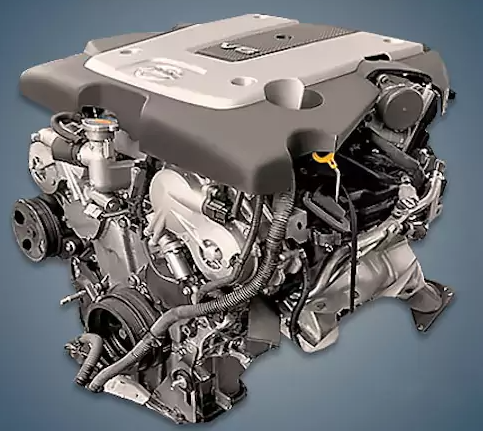
This naturally aspirated V6 engine was designed similarly to its counterpart: it had an aluminum block with two DOHC heads without hydraulic lifters, a timing chain drive, and a CVTCS variable valve timing system installed in the intake and exhaust shafts.
The Chinese and European versions of this engine first surfaced in 2010, but aside from a bit more power and additional catalysts, they were essentially identical.
Internal combustion engines VQ20DE, VQ23DE, VQ25DE, VQ25DET, and VQ25DD are also part of the VQ20 series.
The engine was mounted on:
- Infiniti G25 4 (V36) in 2010 – 2014;
- Infiniti EX25 1 (J50) in 2010 – 2013;
- Infiniti M25 4 (Y51) in 2010 – 2013;
- Infiniti Q70 1 (Y51) in 2013 – 2018;
- Nissan Fuga 1 (Y50) in 2007 – 2009;
- Nissan Fuga 2 (Y51) in 2009 – …;
- Nissan Skyline 12 (V36) in 2006 – 2014;
- Mitsubishi Proudia 2 (BY51) in 2012 – 2016.
Specifications
| Start of production | 2006 |
| Displacement, cc | 2495 |
| Fuel system | injector |
| Power output, hp | 220 – 235 |
| Torque output, Nm | 250 – 265 |
| Cylinder block | aluminum V6 |
| Block head | aluminum 24v |
| Cylinder bore, mm | 85 |
| Piston stroke, mm | 73.3 |
| Compression ratio | 10.3 |
| Features | DOHC |
| Hydraulic lifters | no |
| Timing drive | chain |
| Phase regulator | CVTCS |
| Turbocharging | no |
| Recommended engine oil | 5W-30, 5W-40 |
| Engine oil capacity, liter | 4.7 |
| Fuel type | petrol |
| Euro standards | EURO 4/5 |
| Fuel consumption, L/100 km (for Nissan Skyline 2007) — city — highway — combined |
13.8 8.1 10.2 |
| Engine lifespan, km | ~500 000 |
| Weight, kg | 185 |
Disadvantages of the VQ25HR engine
The catalyst, which is damaged by poor fuel, is this motor’s most troublesome component. After that, its crumbs land in the cylinders and leave scuff marks there. High oil consumption results from all of this, and it only rises with mileage.
Paper gaskets were used for the oil channels beneath the front cover of these engines until 2012. They are frequently forced out even before 100,000–150,000 kilometers. The lubrication pressure then drops, which frequently results in the liners turning.
There are two air filters that can be crushed during an especially rough ride, and there is also a much higher chance of the cylinder head gasket failing and oil seeping into the antifreeze. The engine stalls and the camshaft covers the coke for the same reason. Here, the valves must be adjusted because hydraulic compensators are not supplied.