
From 1997 to 2003, a Japanese factory produced the 2.0-liter Nissan SR20VE engine, which was fitted to sports versions of vehicles like the Primera, Bluebird, and Wingroad. The NEO Variable Valve Lift and Timing system is the main feature that sets this motor apart.
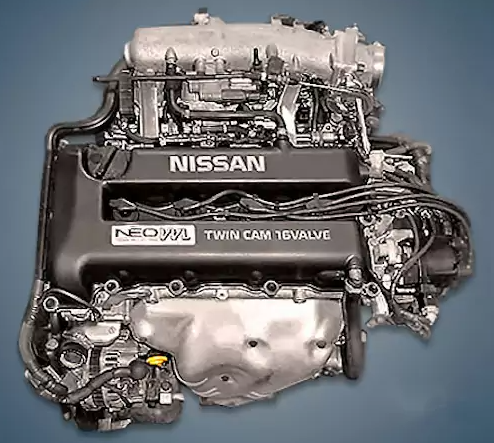
Internal combustion engines SR16VE, SR18DE, SR20DE, SR20DET, and SR20VET are also members of the SR family.
The engine was mounted on:
- Nissan Bluebird U14 in 1997 – 2000;
- Nissan Primera 2 (P11) in 1997 – 2000;
- Nissan Primera 3 (P12) in 2001 – 2003;
- Nissan Wingroad 2 (Y11) in 1999 – 2000.
Specifications
| Production years | 1997-2003 |
| Displacement, cc | 1998 |
| Fuel system | distributed injection |
| Power output, hp | 190 – 205 |
| Torque output, Nm | 196 – 206 |
| Cylinder block | aluminum R4 |
| Block head | aluminum 16v |
| Cylinder bore, mm | 86 |
| Piston stroke, mm | 86 |
| Compression ratio | 11 |
| Features | NEO VVL |
| Hydraulic lifters | no |
| Timing drive | chain |
| Phase regulator | VVL & VVT |
| Turbocharging | no |
| Recommended engine oil | 5W-30 |
| Engine oil capacity, liter | 3.4 |
| Fuel type | petrol |
| Euro standards | EURO 3/4 |
| Fuel consumption, L/100 km (for Nissan Primera 2002) — city — highway — combined |
11.9 6.9 8.7 |
| Engine lifespan, km | ~330 000 |
| Weight, kg | 165 |
Disadvantages of the SR20VE engine
The complicated phase control system in this motor puts a strain on the quality of the oil;
Failures of the mass air flow sensor or idle speed controller are the causes of floating engine speeds at idle.
Lubricant leaks from the crankshaft oil seal or oil pressure sensor are common;
It frequently stretches and the timing chain starts to rattle after 200–250 thousand kilometers; since there are no hydraulic lifters here, the valves must be adjusted on a regular basis.