
The Mercedes M113 engine has proven to be a dependable engine with a resource margin significantly higher than estimated. It was manufactured from 1997 to 2007 (in fact, it is still being produced, but it is already installed on SsangYong Actyon cars). Although this motor is incredibly light, small, and powerful, it still has nearly all of the issues with its predecessor, the M112.
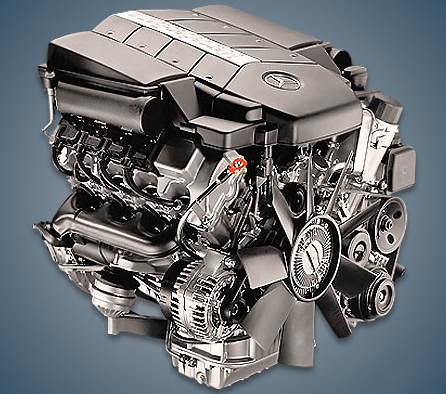
M113 E43, M113 E50, M113 E55, M119 E42, M119 E50, M119 E60, M156, M157, M177, M273, and M278 are all members of the V8-family.
Specifications
| Production years | 1997-2007 |
| Displacement, cc | 5439 |
| Fuel system | injector |
| Power output, hp | 347 – 400 (M 113 E 55 AMG) 476 – 582 (M 113 E 55 ML AMG) |
| Torque output, Nm | 510 – 530 (M 113 E 55 AMG) 700 – 800 (M 113 E 55 ML AMG) |
| Cylinder block | aluminum V8 |
| Block head | aluminum 24v |
| Cylinder bore, mm | 97 |
| Piston stroke, mm | 92 |
| Compression ratio | 11.0 – 11.3 (M 113 E 55 AMG) 10.5 (M 113 E 55 ML AMG) |
| Features | no |
| Hydraulic lifters | yes |
| Timing drive | chain |
| Phase regulator | no |
| Turbocharging | no (M 113 E 55 AMG) kompressor (M 113 E 55 ML AMG) |
| Recommended engine oil | 5W-40 |
| Engine oil capacity, liter | 8.0 |
| Fuel type | petrol |
| Euro standards | EURO 3/4 |
| Engine lifespan, km | ~220 000 |
| Weight, kg | 196 |
Disadvantages of the M113 E55 engine
The significant oil consumption of this family’s power units is their primary issue.
Oil burners are typically caused by hardened valve stem seals.
Because the crankcase ventilation is contaminated, the lubricant pushes through seals or gaskets.
Additionally, leaks frequently originate from the heat exchanger and oil filter housing.
Destroying the crankshaft pulley is another branded engine failure.