
The M113 E50 engine, a continuation of the line of three-valve M112 engines, is remarkably small and light compared to its predecessor, the M119. The engineers created the M113 by adding two more cylinders to the six. It was installed on all Mercedes models with rear-wheel drive and all-wheel drive because of its small size. Each cylinder has three valves: two intake and one exhaust. The M113 engine’s exhaust valve is 30% smaller than the combined area of its predecessor’s two exhaust valves, and it weighs less (the rod is filled with sodium).
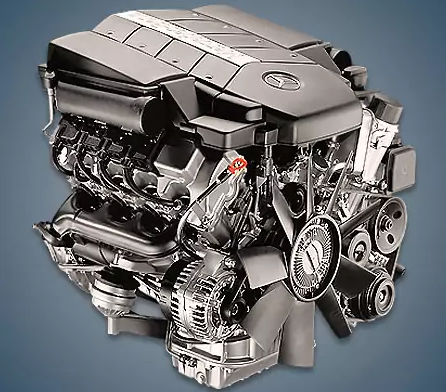
M113 E43, M113 E50, M113 E55, M119 E42, M119 E50, M119 E60, M156, M157, M177, M273, and M278 are all members of the V8-family.
Specifications
| Production years | 1997-2008 |
| Displacement, cc | 4966 |
| Fuel system | injector |
| Power output, hp | 296 – 306 |
| Torque output, Nm | 460 |
| Cylinder block | aluminum V8 |
| Block head | aluminum 24v |
| Cylinder bore, mm | 97 |
| Piston stroke, mm | 84 |
| Compression ratio | 9.5 |
| Features | no |
| Hydraulic lifters | yes |
| Timing drive | double row chain |
| Phase regulator | no |
| Turbocharging | no |
| Recommended engine oil | 5W-40 |
| Engine oil capacity, liter | 8.0 |
| Fuel type | petrol |
| Euro standards | EURO 2/3 |
| Fuel consumption, L/100 km (for Mercedes S500 W220) — city — highway — combined |
18.9 8.9 13.2 |
| Engine lifespan, km | ~350 000 |
| Weight, kg | 196 |
Disadvantages of the M113 E50 engine
This family’s power units’ primary issue is their excessive oil consumption.
Hardened valve stem seals are typically the primary cause of the oil burner.
The lubricant pushes through gaskets or seals because the crankcase ventilation is contaminated.
Additionally, the heat exchanger and oil filter housing are frequently the source of leaks.
Crankshaft pulley destruction is another type of branded engine failure.