
The company produced the 1.8-liter 16-valve Dodge EBA engine between 2006 and 2009, but it was only fitted to the popular Caliber model’s basic modifications prior to its restyling. As a member of the World Gasoline Engine Alliance, Hyundai and Mitsubishi collaborated on the motor’s development.
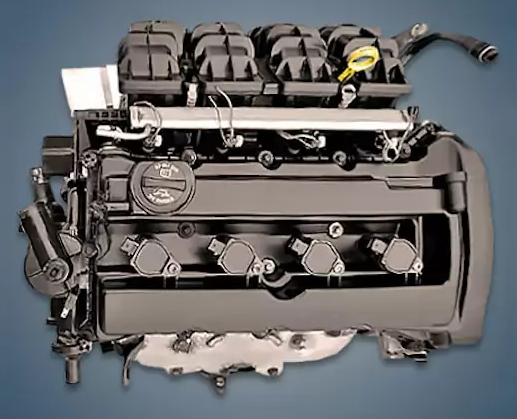
Internal combustion engines (ECN, ED3, and ED4) are also part of the World engine series.
The engine was installed on:
- Dodge Caliber 1 (PM) in 2006 – 2009.
Specifications
| Production years | 2006-2009 |
| Displacement, cc | 1798 |
| Fuel system | injector |
| Power output, hp | 148 |
| Torque output, Nm | 169 |
| Cylinder block | aluminum R4 |
| Block head | aluminum 16v |
| Cylinder bore, mm | 86 |
| Piston stroke, mm | 77.4 |
| Compression ratio | 10.5 |
| Features | DOHC |
| Hydraulic lifters | no |
| Timing drive | chain |
| Phase regulator | Dual VVT |
| Turbocharging | no |
| Recommended engine oil | 5W-30 |
| Engine oil capacity, liter | 4.3 |
| Fuel type | petrol |
| Euro standards | EURO 4 |
| Fuel consumption, L/100 km (for Dodge Caliber 2011) — city — highway — combined |
10.1 5.9 7.4 |
| Engine lifespan, km | ~220 000 |
Disadvantages of the EBA engine
Contamination and electronic choke breakage are the most frequent issues;
Additionally, owners frequently experience thermostat unit antifreeze leaks;
Low resources set the fuel pump, crankshaft pulley damper, and engine support apart;
The timing chain is typically extended and oil scraper rings are located closer to 200,000 kilometers; of all the models in the series, only the 1.8-liter frequently experienced cylinder scuffing.