
Between 1983 and 2000, a number of Mercedes OM601 diesel engines with capacities of 2.0, 2.2, and 2.3 liters were put together and used in both commercial minibuses and passenger models like the W201 and W202. This unit underwent three atmospheric modifications and one turbocharger.
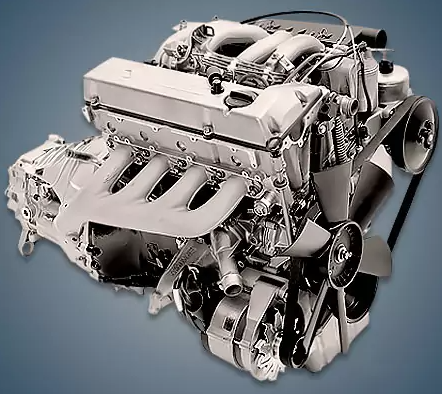
The diesel R4-family comprises OM616, OM601, OM604, OM611, OM640, OM646, OM651, OM654, and OM668.
The OM601 engine’s primary components are an aluminum cylinder head, hydraulic tappets in the valve drive, and a high pressure pump with automated air removal.
These motors have higher liter power, are noisier, faster, and more economical. They also need much more skilled service. Deteriorating lubrication conditions cause hydraulic pushers on engines to fail, accompanied by the distinctive knock of valves.
A duplex chain from the crankshaft powers the camshafts and the fuel injection pump. The oil pump is powered by a different single-row chain that is connected to the crankshaft. Fuel is delivered indirectly via a prechamber. The fuel pump is a mechanical fuel injection device that has load-sensing idle speed control, automatic height compensation, and mechanical speed control. Oil from the general circuit of the engine lubrication system is used to lubricate the in-line multi-section injection pumps of OM601 diesels. Consequently, the engine, pump camshaft, pushers, plunger swivel bushings, gear rack, and pump regulator all wear down when engine oil quality and replacement timing are compromised.
Specifications
| Production years | 1983-2000 |
| Displacement, cc | 1997 (OM 601 D 20) 2197 (OM 601 D 22) 2299 (OM 601 D 23) 2299 (OM 601 D 23 LA) |
| Fuel system | prechamber |
| Power output, hp | 72 – 75 (OM 601 D 20) 73 (OM 601 D 22) 79 – 82 (OM 601 D 23) 98 (OM 601 D 23 LA) |
| Torque output, Nm | 123 – 130 (OM 601 D 20) 130 (OM 601 D 22) 152 – 157 (OM 601 D 23) 230 (OM 601 D 23 LA) |
| Cylinder block | cast iron R4 |
| Block head | aluminum 8v |
| Cylinder bore, mm | 87 (OM 601 D 20) 87 (OM 601 D 22) 89 (OM 601 D 23) 89 (OM 601 D 23 LA) |
| Piston stroke, mm | 84 (OM 601 D 20) 92.4 (OM 601 D 22) 92.4 (OM 601 D 23) 92.4 (OM 601 D 23 LA) |
| Compression ratio | 22.0 |
| Features | no |
| Hydraulic lifters | yes |
| Timing drive | chain |
| Phase regulator | no |
| Turbocharging | no yes (OM 601 D 23 LA) |
| Recommended engine oil | 5W-40 |
| Engine oil capacity, liter | 6.0 |
| Fuel type | diesel |
| Euro standards | EURO 0/1 |
| Fuel consumption, L/100 km (for Mercedes V 230 TD 1997) — city — highway — combined |
12.1 6.8 8.8 |
| Engine lifespan, km | ~500 000 |
| Weight, kg | 175 |
The engine was installed on:
- Mercedes C-Class W201 in 1983 – 1993; C-Class W202 in 1993 – 1995;
- Mercedes E-Class W124 in 1984 – 1995;
- Mercedes Sprinter W901 in 1995 – 2000;
- Mercedes TN/T1 VAN in 1988 – 1995;
- Mercedes V-Class W 638 in 1996 – 1999.
Disadvantages of the OM601 engine
As long as premium fuel and oil are used, these diesel engines are incredibly dependable.
Pump components and hydraulic lifters rapidly deteriorate due to inadequate lubrication.
Engine overheating and cylinder head gasket failure are frequently caused by contaminated antifreeze.
The centrifugal clutch of the injection advance angle is a weak point in the fuel system.
The block head may crack if the timing chain, which covers 200–250 thousand kilometers, breaks.