
A five-cylinder pre-chamber diesel engine with an ERE control system (Electronische Reihen Einspritzpumpe) is the Mercedes OM605. This 2.5-liter engine was built between 1993 and 2001 and fitted to a number of the company’s most well-known models, including the W124, W202, and W210. There were two versions available: a turbocharged version with 150 horsepower and an atmospheric version with 113 horsepower.
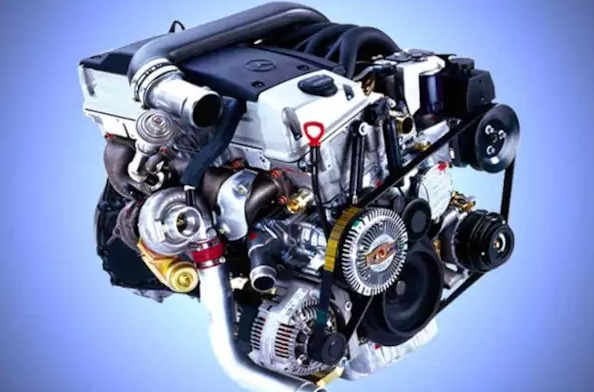
The diesel R5-family comprises OM617, OM602, OM605, OM612, and OM647.
Specifications
| Production years | 1993-2001 |
| Displacement, cc | 2497 |
| Fuel system | prechamber |
| Power output, hp | 113 (OM 605 D 25 or 250 D) 150 (OM 605 D 25 LA or 250 TD) |
| Torque output, Nm | 170 (OM 605 D 25 or 250 D) 280 (OM 605 D 25 LA or 250 TD) |
| Cylinder block | cast iron R5 |
| Block head | aluminum 20v |
| Cylinder bore, mm | 87 |
| Piston stroke, mm | 84 |
| Compression ratio | 22.0 |
| Features | no |
| Hydraulic lifters | yes |
| Timing drive | chain |
| Phase regulator | no |
| Turbocharging | no (OM 605 D 25 or 250 D) yes (OM 605 D 25 LA or 250 TD) |
| Recommended engine oil | 5W-40 |
| Engine oil capacity, liter | 6.5 |
| Fuel type | diesel |
| Euro standards | EURO 2/3 |
| Fuel consumption, L/100 km (for Mercedes C250 TD 1999) — city — highway — combined |
9.4 5.3 7.3 |
| Engine lifespan, km | ~400 000 |
| Weight, kg | 215 |
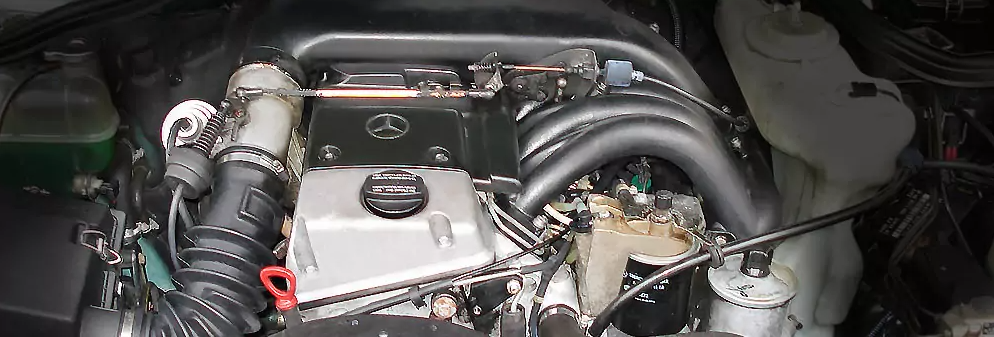
The engine was installed on:
- Mercedes C-Class W202 in 1993 – 2001;
- Mercedes E-Class W124 in 1993 – 1996; E-Class W210 in 1995 – 1999.
Disadvantages of the OM605 engine
Increased vibrations during motor operation have a detrimental effect on the resources of its supports; the timing chain can only last 200,000 kilometers;
The aluminum cylinder head could easily burst from this diesel’s fear of overheating; shrinking quick couplers help the fuel system air out;
Low-quality oil is a common cause of hydraulic lift failures.
Benefits of OM605
- Reliability: a low-power cast iron motor that can easily withstand up to 1 million kilometers with proper maintenance because the piston group does not experience heavy loads;
- minimal electronics—the absence of numerous computers and electronics promotes harmonious operation;
- and affordability when compared to gasoline engines.