
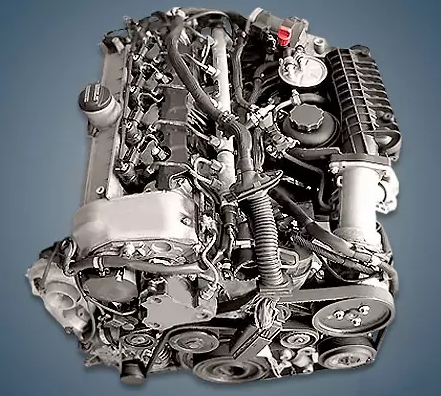
Produced between 2002 and 2005, the 2.7-liter 5-cylinder in-line Mercedes OM647 engine was only fitted to the pre-styling modification of the E-Class model in the W211 body.
The diesel R5-family consists of OM617, OM602, OM605, OM612, and OM647.
Five cylinders are used by OM647. A VGT or VNT turbocharger powers the engine. The maximum boost pressure is 1600 bar. The motor has two camshafts, and a timing chain is used to drive it. Each cylinder has four valves that can be adjusted using pushers. An electronically operated EGR valve is present. The fuel supply is metered, and the control unit also manages the fuel pump.
Pre-injection refers to burning a tiny amount of fuel prior to the main process. This allows the chamber to be heated, which helps the motor start and warm up quickly. Naturally, there is better maintenance of the pressure parameter and the temperature regime. A balance shaft that rotates at a faster speed in opposition to the crankshaft is a feature of some variations of these engines.
Specifications
| Production years | 2002-2005 |
| Displacement, cc | 2685 |
| Fuel system | Common Rail |
| Power output, hp | 177 |
| Torque output, Nm | 400 |
| Cylinder block | cast iron R5 |
| Block head | aluminum 20v |
| Cylinder bore, mm | 88 |
| Piston stroke, mm | 88.3 |
| Compression ratio | 18.0 |
| Features | no |
| Hydraulic lifters | yes |
| Timing drive | chain |
| Phase regulator | no |
| Turbocharging | VGT |
| Recommended engine oil | 5W-40 |
| Engine oil capacity, liter | 6.5 |
| Fuel type | diesel |
| Euro standards | EURO 4 |
| Fuel consumption, L/100 km (for Mercedes E270 CDI 2003) — city — highway — combined |
9.1 5.1 6.5 |
| Engine lifespan, km | ~330 000 |
| Weight, kg | 215 |
The engine was installed on:
- Mercedes E-Class W211 in 2002 – 2005.
Disadvantages of the OM647 engine
Common Rail fuel equipment is the primary cause of this diesel engine’s issues.
The drying of rapid releases is typically the cause of this system’s airing.
After disassembling the nozzles, the refractory washers must be replaced or they will coke.
The dampers of the variable intake manifold geometry are frequently wedged as a result of soot.
Electrically, the injector wiring burns out and the camshaft and crankshaft position sensors frequently malfunction here.