
In 1969, Scania unveiled a new 350 horsepower V8 engine, which was quickly dubbed Europe’s most potent diesel truck engine. And he has had this reputation for a long time. The idea behind this engine is a V8 engine with a displacement of 14.2 liters and a camber of 90 degrees that is both powerful and small.
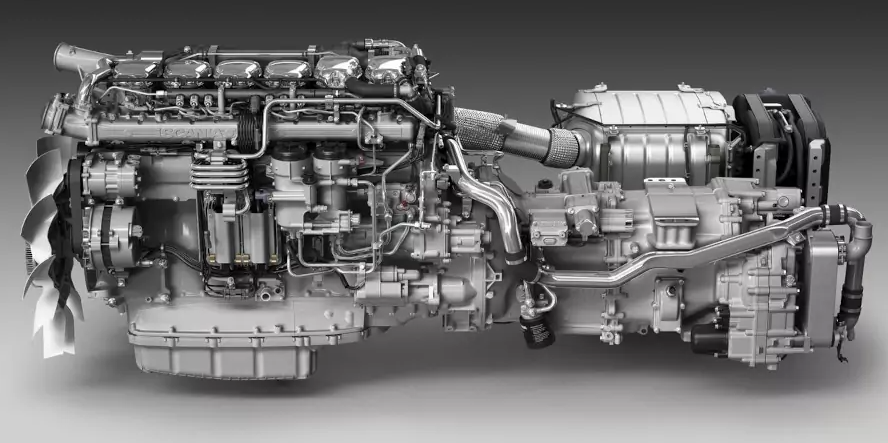
Since its introduction, the DS 14 has been turbocharged. This engine was even more distinctive in appearance because each cylinder head had a V-shaped cover. Scania DS14 engines can be used under the highest loads because of their combined power and maximum torque over a broad rpm range.
Specifications
| Manufacturer | Scania |
| Also called | DS 14 |
| Production years | 1969 |
| Engine’s type | diesel engine 4-stroke, injection, liquid cooling |
| Number of cylinders | 8 |
| Piston stroke, mm | 140 |
| Cylinder bore, mm | 127 |
| Displacement, cc | 14190 |
| Power output, hp | 350-388 |
| Torque output, Nm / rpm | 2030-2300 |
| Euro standards | Euro 2 |
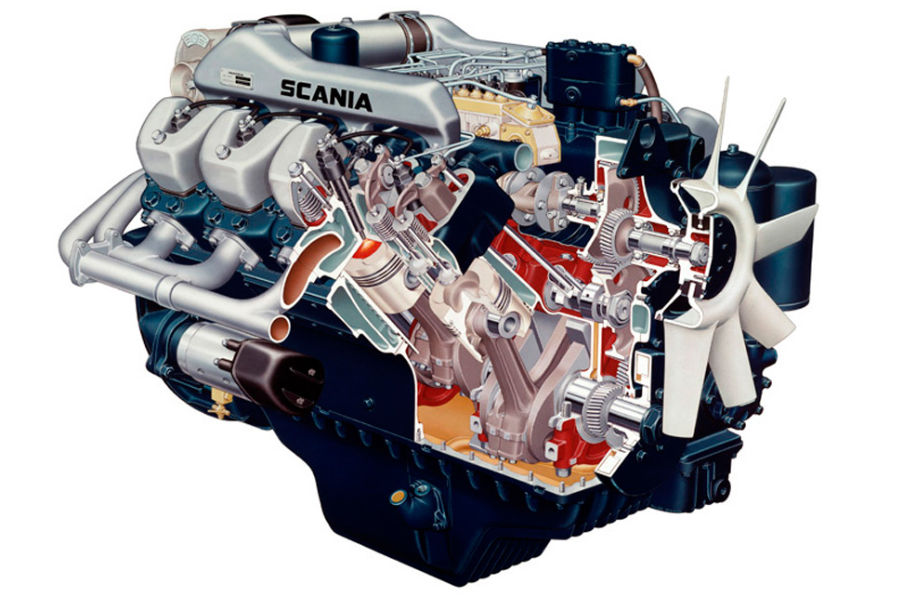
These engines’ design features, such as the cylinder heads’ separation from one another and the cylinder block’s interchangeable liners, make repairs much easier. A rotational speed of 1900 rpm yields the maximum power.
Over the years of series production, Scania’s renowned 14-liter V-8 engines have experienced major modifications. In addition to many other technologies, the units’ strength and dependability were improved, and a contemporary fuel injection system that lowers emissions and fuel consumption was implemented.
Scania DS 14 engines’ high performance makes them perfect for a variety of specialized transportation applications, especially heavy loads, and long-distance cargo transportation.
Explanation of DS 14 marking
| DS | Turbocharged engine (old designation) |
| 14 | Working volume in cubic meters decimetres |