
Overview & Design Features
The Acura C30A is a longitudinally mounted, naturally aspirated 3.0-liter (2977cc) 90-degree V6 engine, renowned for its technological sophistication and robust construction. Developed by Honda Motor Co. Ltd., it gained prominence as the power plant for the inaugural Acura NSX sports car, introduced in 1990. This engine holds significant historical importance as Honda’s first production V6 to incorporate its groundbreaking Variable Valve Timing and Lift Electronic Control (VTEC) system, marking a paradigm shift in performance and efficiency for mass-produced engines.
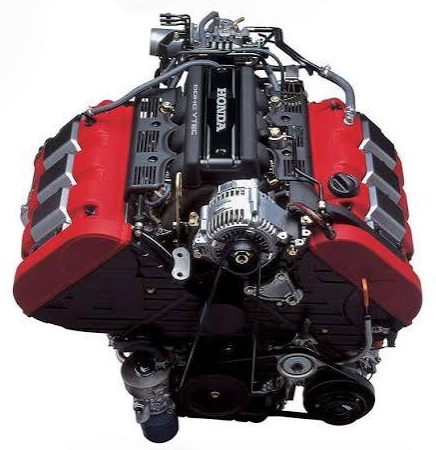
Engineered for high performance and durability, the C30A features an all-aluminum cylinder block and cylinder heads, contributing to its light weight and efficient heat dissipation. Its internal architecture includes a forged steel crankshaft, connecting rods, and high-performance pistons, ensuring structural integrity under demanding operating conditions. Fuel delivery is managed by a multi-point electronic fuel injection (MPFI) system. The C30A utilizes a dual overhead camshaft (DOHC) valvetrain with four valves per cylinder, critically integrating the VTEC system which seamlessly transitions between low and high-lift cam profiles to optimize power delivery across the entire RPM range, enhancing both low-end torque and high-end horsepower without compromising fuel efficiency.
The Acura C30A engine was primarily deployed in the first-generation Acura NSX (NA1 chassis code) from its launch in 1990 until 1996. It was available in models paired with both 5-speed manual and 4-speed automatic transmissions. While the C30A served as the foundational engine, later iterations of the NSX received the larger C32B engine, signaling an evolution of the powertrain within the platform. The C30A, however, remained a core component of the NSX’s early identity and performance legacy.
Technical Specifications
| Displacement (cc) | 2977 |
| Max Power (hp (kW) @ RPM) | 270 (201) @ 7100 (Manual Transmission) |
| Max Torque (Nm (kg*m) @ RPM) | 285 (29.1) @ 5400 (Manual Transmission) |
| Fuel Type | Premium Unleaded (91+ RON) |
| Fuel Consumption (l/100 km) | ~11.5 – 13.5 (Combined, Varies by Driving Style) |
| Engine Type | 90-degree V6, Naturally Aspirated |
| Compression Ratio | 10.2:1 |
| Cylinder Bore (mm) | 90 |
| Piston Stroke (mm) | 78 |
| Valvetrain | DOHC VTEC |
| Valves per Cylinder | 4 |
| Additional Info | All-aluminum block and heads, Forged crankshaft, Multi-point fuel injection, Dry sump lubrication system (manual transmission models) |
Common Problems & Reliability
The Acura C30A engine is widely regarded for its exceptional reliability and robust engineering, a testament to Honda’s meticulous development standards. However, like any complex mechanical system, certain components can exhibit wear or issues over extended periods, particularly with inadequate maintenance. A common age-related concern involves the distributor shaft seals, which can degrade and lead to oil leaks, potentially fouling the spark plug wires and causing misfires. Another area requiring attention on high-mileage examples is the degradation of valve stem seals, which can result in increased oil consumption and visible blue smoke from the exhaust during startup or deceleration. Lastly, while not a “problem” in itself, the timing belt service is a critical and relatively expensive preventative maintenance item; neglect can lead to catastrophic engine failure due to interference between valves and pistons. With proper and timely maintenance, the C30A engine can reliably exceed 200,000 miles (approximately 320,000 km) before requiring any major internal overhaul.
Maintenance Tips & Service Schedule
Optimal longevity and performance from the C30A engine are directly tied to adherence to a strict maintenance schedule. Engine oil and filter changes should be performed every 5,000 to 7,500 miles (8,000-12,000 km) or every 6 months, using a high-quality synthetic 5W-30 motor oil. Spark plugs, typically platinum-tipped, are recommended for replacement every 60,000 to 100,000 miles (96,000-160,000 km). The most crucial service interval involves the timing belt replacement, which must be completed every 60,000 to 90,000 miles (96,000-145,000 km) or every 7 years, whichever comes first. This service should always include the replacement of the water pump, timing belt tensioner, and idler pulleys to prevent future failures. Coolant flushes and replacements are recommended every 3-5 years or 30,000-60,000 miles (48,000-96,000 km) using Honda-specified coolant. Regular inspection of the distributor for oil leaks and addressing them promptly will prevent more significant issues. Given the engine’s complexity and the vehicle’s age, professional service by technicians familiar with the NSX platform is highly advisable.
Conclusion
The Acura C30A engine stands as a testament to Honda’s engineering prowess, offering a blend of high performance, advanced technology, and legendary reliability. For a used vehicle buyer, an NSX equipped with a C30A engine represents an excellent choice, provided its maintenance history is impeccable. While specific age-related issues such as distributor leaks and valve stem seal wear can occur, these are generally manageable with proactive maintenance. The critical timing belt service is a non-negotiable expense that signifies the owner’s commitment to the engine’s health. Ultimately, a well-maintained C30A engine is a safe, robust, and highly desirable powertrain, promising many more miles of exhilarating driving.