
Overview & Design Features
The J35Z2 is a prominent member of the Honda J-series engine family, primarily recognized for its deployment in various Honda models, aligning with Acura’s engineering lineage as Honda’s luxury division. Introduced around the late 2000s, this naturally aspirated, 3.5-liter (3471 cc) SOHC V6 engine represents a balance of performance, efficiency, and Honda’s signature reliability, often associated with mainstream and premium offerings from the brand. Its design emphasizes a compact form factor for transverse mounting, contributing to efficient vehicle packaging and favorable weight distribution for front-wheel-drive and all-wheel-drive platforms.
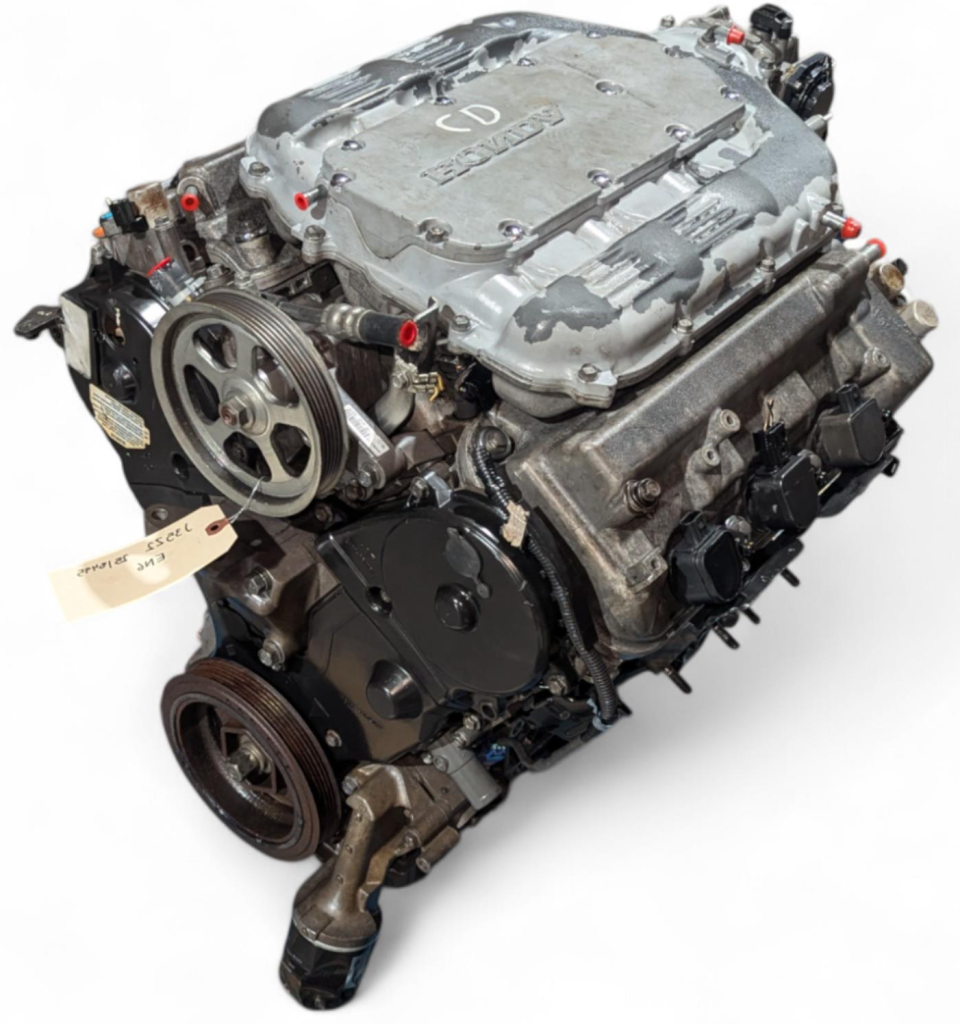
Core engineering of the J35Z2 features an all-aluminum cylinder block and cylinder heads, facilitating lighter overall engine weight and improved heat dissipation. It utilizes Honda’s renowned Variable Valve Timing and Lift Electronic Control (VTEC) system, specifically a Single Overhead Camshaft (SOHC) implementation that varies valve timing and lift for the intake valves, optimizing power across the RPM range and enhancing fuel efficiency. Fuel delivery is managed by a multi-point programmed fuel injection (PGM-FI) system, precisely controlling fuel delivery to each cylinder. A significant feature distinguishing the J35Z2, and many contemporary J-series engines, is its inclusion of Variable Cylinder Management (VCM), which can deactivate cylinders (typically three of the six) during light-load cruising to further improve fuel economy.
The J35Z2 engine was specifically deployed in several key Honda models. Its primary applications include the 2008-2012 Honda Accord (EX-L V6 Automatic Sedan and Coupe trims) and the 2010-2012 Honda Crosstour (all V6 trims). While the engine family serves many Acura vehicles, the J35Z2 variant is most commonly identified with these specific Honda passenger cars, showcasing its versatility and capability within the broader Honda/Acura product strategy.
Technical Specifications
| Displacement | 3471 cc (3.5L) |
| Max Power | 271 hp (202 kW) @ 6200 RPM |
| Max Torque | 344 Nm (35.1 kg*m) @ 5000 RPM |
| Fuel Type | Unleaded Gasoline (Premium Recommended) |
| Fuel Consumption (Combined) | ~10.2 l/100 km (Honda Accord V6 reference) |
| Engine Type | V6, SOHC, PGM-FI |
| Compression Ratio | 10.5:1 |
| Cylinder Bore | 89.0 mm |
| Piston Stroke | 93.0 mm |
| Valvetrain | SOHC VTEC (Single Overhead Camshaft with Variable Valve Timing and Lift Electronic Control) |
| Valves per Cylinder | 4 (24 total) |
| Additional Info | Variable Cylinder Management (VCM) for enhanced fuel economy |
Common Problems & Reliability
The J35Z2 engine, like many Honda powerplants, possesses a strong reputation for overall durability; however, specific issues related to its Variable Cylinder Management (VCM) system are frequently reported. The VCM system, designed to deactivate cylinders, can lead to increased oil consumption and premature wear on piston rings in the cylinders that frequently deactivate. This can manifest as spark plug fouling, misfires, excessive carbon buildup, and ultimately, reduced engine performance and longevity if left unaddressed. Additionally, some owners report vibrations or drone during VCM activation/deactivation cycles.
Another area of concern, not a defect but a significant maintenance item, is the timing belt. Unlike engines with timing chains, the J35Z2 utilizes a timing belt that requires periodic replacement. Neglecting this crucial service interval can lead to catastrophic engine failure if the belt breaks. Lastly, common high-mileage issues can include oil leaks from the valve cover gaskets and oil pan gasket, as well as wear on accessory drive components like the serpentine belt tensioner.
With diligent maintenance and proactive attention to potential VCM-related symptoms, the J35Z2 can achieve an impressive service life, often exceeding 250,000 miles (approximately 400,000 km). However, vehicles with unaddressed VCM issues may experience a significantly reduced lifespan, potentially requiring major engine work or replacement sooner.
Maintenance Tips & Service Schedule
Proper maintenance is paramount for the longevity and reliable operation of the J35Z2 engine. Adhering to the manufacturer’s recommended service schedule is critical, with particular attention to specific components. Regular oil changes are essential; using a high-quality synthetic 0W-20 or 5W-20 engine oil every 5,000-7,500 miles (8,000-12,000 km), or according to the vehicle’s maintenance minder system, is recommended. More frequent oil changes, especially if VCM is active, can help mitigate potential oil consumption issues.
Spark plugs, typically iridium-tipped, should be replaced approximately every 100,000-105,000 miles (160,000 km). Critically, the timing belt replacement interval is every 105,000 miles (168,000 km) or 7 years, whichever comes first. This service should always include the replacement of the water pump, tensioner, and idler pulleys as a preventative measure. Ignoring the timing belt can result in severe engine damage. The engine’s coolant should be flushed and replaced every 5 years or 100,000 miles (160,000 km) using Honda-specific or equivalent long-life coolant. Air filter and cabin filter replacements should follow standard intervals, typically every 15,000-30,000 miles (24,000-48,000 km) depending on driving conditions.
Conclusion
The Acura J35Z2 engine, a product of Honda’s robust engineering, stands as a generally reliable and capable powerplant offering a strong balance of performance and efficiency. For a used vehicle buyer, it represents a potentially safe choice, provided the vehicle has a documented service history demonstrating consistent maintenance. The primary caveat remains the Variable Cylinder Management (VCM) system; careful inspection for VCM-related issues such as excessive oil consumption, fouled spark plugs, or persistent misfires is advised. A J35Z2 engine that has been meticulously maintained, particularly with respect to oil changes and timely timing belt replacement, can offer many years of dependable service. However, potential buyers should be aware of the VCM characteristic and consider its long-term implications or explore options for VCM deactivation if persistent issues are a concern.