
From 1990 to 1993, the company produced the 2.0-liter Audi AAD gasoline engine, which was fitted to the company’s most well-liked models at the time with indexes 80 and 100. This power unit had a highly erratic KE-Motronic fuel injection system.
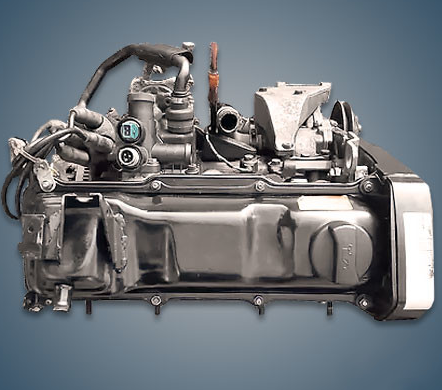
The EA827 2.0l series includes: 2E, AAD, AAE, ABT, ABK, ADY, AGG, ABF, ACE.
Specifications
| Production years | 1990-1993 |
| Displacement, cc | 1984 |
| Fuel system | KE-Motronic |
| Power output, hp | 115 |
| Torque output, Nm | 168 |
| Cylinder block | cast iron R4 |
| Block head | aluminum 8v |
| Cylinder bore, mm | 82.5 |
| Piston stroke, mm | 92.8 |
| Compression ratio | 10.4 |
| Features | SOHC |
| Hydraulic lifters | yes |
| Timing drive | belt |
| Phase regulator | no |
| Turbocharging | no |
| Recommended engine oil | 5W-30 |
| Engine oil capacity, liter | 3.0 |
| Fuel type | petrol |
| Euro standards | EURO 2 |
| Fuel consumption, L/100 km (for Audi 100 1992) — city — highway — combined |
11.5 6.7 7.9 |
| Engine lifespan, km | ~320 000 |
The engine was installed on:
- Audi 80 B3 (8A) in 1990 – 1991;
- Audi 100 C4 (4A) in 1990 – 1993.
Disadvantages of the Audi AAD engine
Owners of cars with such engines typically lament the unpredictability of KE-Motronic; sensor malfunctions or air leaks are the primary causes of unstable operation; numerous ignition system components are unreliable;
Hydraulic lifters frequently fail and knock at very long runs; the timing belt is intended to last 90,000 kilometers, but when it breaks, the valves typically do not bend.