
From 1989 to 1996, the German company produced the 2.0-liter Volkswagen 2E engine, which was used in numerous Seat vehicles as well as mass models like the Vento, Golf, and Passat. The Digifant integrated control system, which was pertinent at the time, was installed in the power unit.
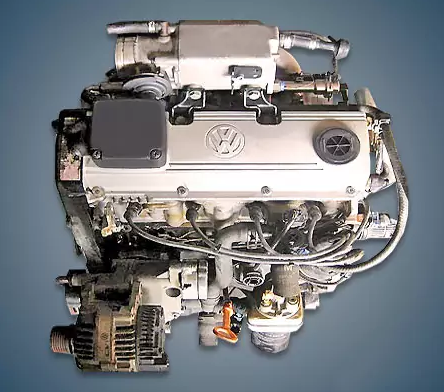
The models in the EA827 2.0l series are 2E, AAD, AAE, ABT, ABK, ADY, AGG, ABF, and ACE.
Specifications
| Production years | 1989-1996 |
| Displacement, cc | 1984 |
| Fuel system | distributed injection |
| Power output, hp | 115 |
| Torque output, Nm | 166 |
| Cylinder block | cast iron R4 |
| Block head | aluminum 8v |
| Cylinder bore, mm | 82.5 |
| Piston stroke, mm | 92.8 |
| Compression ratio | 10.0 |
| Features | SOHC |
| Hydraulic lifters | yes |
| Timing drive | belt |
| Phase regulator | no |
| Turbocharging | no |
| Recommended engine oil | 5W-40 |
| Engine oil capacity, liter | 4.0 |
| Fuel type | petrol |
| Euro standards | EURO 2 |
| Fuel consumption, L/100 km (for VW Passat B3 1992) — city — highway — combined |
10.9 7.6 8.8 |
| Engine lifespan, km | ~400 000 |
The engine was installed on:
- Volkswagen Corrado 1 (509) in 1993 – 1994;
- Volkswagen Golf 3 (1H) in 1991 – 1994;
- Volkswagen Passat B3 (31) in 1989 – 1993; Passat B4 (3A) in 1993 – 1994;
- Volkswagen Vento 1 (1H) in 1992 – 1994;
- Seat Cordoba 1 (6K) in 1993 – 1996;
- Seat Ibiza 2 (6K) in 1993 – 1996;
- Seat Toledo 1 (1L) in 1991 – 1996.
Disadvantages of the VW 2E engine
The engine is regarded as one of the most dependable in its class and rarely causes problems; a dirty throttle or idle speed controller is typically the cause of floating engine speeds;
Additionally, the distributor or its wires frequently fail in the ignition system;
Hydraulic lifters can already knock 100–150 thousand kilometers due to bad oil;
Piston rings typically lie down and oil burn starts during long runs.