
Between 1987 and 1991, the German company assembled the 1.8-liter Volkswagen PF engine, which was fitted to the second generation Golf and Jetta models, Passat B3, and Corrado coupe. The power unit’s Digifant injection control system made it unique among analogues.
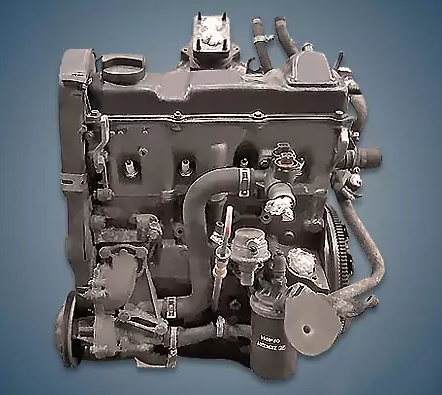
RP, AAM, ABS, ADZ, PF, ADR, ARG, AEB, and ANB are all part of the EA827 1.8l series.
Specifications
| Production years | 1987-1991 |
| Displacement, cc | 1781 |
| Fuel system | distributed injection |
| Power output, hp | 107 |
| Torque output, Nm | 154 – 157 |
| Cylinder block | cast iron R4 |
| Block head | aluminum 8v |
| Cylinder bore, mm | 81 |
| Piston stroke, mm | 86.4 |
| Compression ratio | 10.0 |
| Features | SOHC |
| Hydraulic lifters | yes |
| Timing drive | belt |
| Phase regulator | no |
| Turbocharging | no |
| Recommended engine oil | 5W-40 |
| Engine oil capacity, liter | 3.8 |
| Fuel type | petrol |
| Euro standards | EURO 2 |
| Fuel consumption, L/100 km (for VW Passat 1990) — city — highway — combined |
10.7 7.4 8.6 |
| Engine lifespan, km | ~360 000 |
The engine was installed on:
- Volkswagen Corrado 1 (509) in 1988 – 1990;
- Volkswagen Golf 2 (1G) in 1987 – 1991;
- Volkswagen Jetta 2 (1G) in 1987 – 1991;
- Volkswagen Passat B3 (31) in 1988 – 1990.
Disadvantages of the VW PF engine
On specialized forums, people most frequently complain about floating or increased idle speed, which is typically caused by dirt on the throttle, sensor malfunctions, or an idle speed stabilization valve. Ignition system failures, such as those involving candles, distributors, and wires, are next in popularity; hydraulic lifters dislike bad oil and can knock up to 100,000 kilometers; at high mileage, oil burn frequently starts due to ring or cap wear.