
The 1.3-liter Volkswagen NZ injection engine was manufactured between 1985 and 1994 and was fitted to the Golf, Jetta, and Polo models, which were the company’s best-selling models at the time. The Digijet injection control system was the main feature that set this power unit apart.
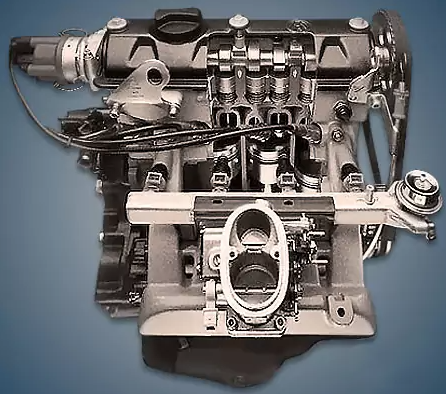
MH and NZ are part of the EA111-1.3 series.
Specifications
| Production years | 1985-1994 |
| Displacement, cc | 1272 |
| Fuel system | injector |
| Power output, hp | 55 |
| Torque output, Nm | 96 |
| Cylinder block | cast iron R4 |
| Block head | aluminum 8v |
| Cylinder bore, mm | 75 |
| Piston stroke, mm | 72 |
| Compression ratio | 9.5 |
| Features | SOHC |
| Hydraulic lifters | yes |
| Timing drive | belt |
| Phase regulator | no |
| Turbocharging | no |
| Recommended engine oil | 5W-40 |
| Engine oil capacity, liter | 3.5 |
| Fuel type | petrol |
| Euro standards | EURO 1 |
| Fuel consumption, L/100 km (for VW Golf 2 1989) — city — highway — combined |
8.7 5.9 6.9 |
| Engine lifespan, km | ~300 000 |
The engine was installed on:
- Volkswagen Golf 2 (1G) in 1985 – 1992;
- Volkswagen Jetta 2 (1G) in 1985 – 1992;
- Volkswagen Polo 2 (80) in 1990 – 1994.
Disadvantages of the VW NZ engine
This engine is dependable and structurally straightforward, and the majority of its malfunctions are caused by aging.
Repairing the Digijet control unit is the most challenging aspect of this situation.
Low resource is another characteristic that sets apart the coolant temperature sensor and ignition system components.
Periodically, the throttle assembly and fuel pressure regulator need to be serviced.
Oil may be forced through the dipstick by the freezing crankcase ventilation system during the winter.