
From 1996 to 1999, the Volkswagen AER 1.0 MPi 1.0-liter gasoline engine was manufactured and fitted to several of the company’s small models, including the Lupo, Polo, Seat Ibiza, and Arosa. The OHV motor under the AHT index, which was by then quite antiquated, was replaced by this power unit.
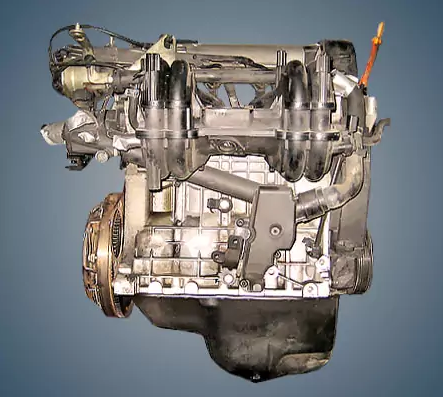
AER and AUC are part of the EA111-1.0 series.
Specifications
| Production years | 1996-1999 |
| Displacement, cc | 999 |
| Fuel system | injector |
| Power output, hp | 50 |
| Torque output, Nm | 86 |
| Cylinder block | aluminum R4 |
| Block head | aluminum 8v |
| Cylinder bore, mm | 67.1 |
| Piston stroke, mm | 70.6 |
| Compression ratio | 10.5 |
| Features | SOHC |
| Hydraulic lifters | yes |
| Timing drive | belt |
| Phase regulator | no |
| Turbocharging | no |
| Recommended engine oil | 5W-30 |
| Engine oil capacity, liter | 3.2 |
| Fuel type | petrol |
| Euro standards | EURO 2 |
| Fuel consumption, L/100 km (for VW Polo 1998) — city — highway — combined |
7.8 4.9 5.9 |
| Engine lifespan, km | ~240 000 |
The engine was installed on:
- Seat Arosa 1 (6H) in 1997 – 1999;
- Seat Ibiza 2 (6K) in 1996 – 1999;
- Volkswagen Lupo 1 (6X) in 1998 – 1999;
- Volkswagen Polo 3 (6N) in 1996 – 1999.
Disadvantages of the VW AER engine
Although this power unit is generally dependable, it frequently frets over trivial issues.
The ignition system, which includes candles, coils, and high-voltage wires, is responsible for the majority of malfunctions.
The valves always bend when the timing belt breaks because it is made to last roughly 90,000 kilometers.
Antifreeze temperature sensors and camshaft position sensors frequently malfunction.
Oil is forced through the dipstick by the crankcase ventilation system, which freezes in frost.