
From 2009 to 2018, the company’s businesses produced the 2.0-liter VW CLCA engine, which was fitted to well-known models like the Golf, Jetta, Touran, Skoda Octavia, and Yeti. Without balancer shafts and swirl flaps, this is the most basic diesel model in the series.
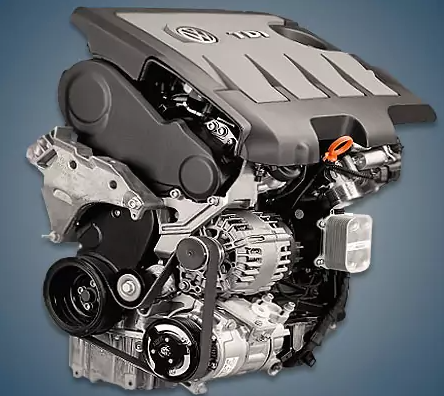
The following are also included in the EA189 series: CAYC, CAAC, CAGA, CAHA, CBAB, CFCA, CFGB, CLCA, CLJA, CKTB, CFHC, and CKUB.
Specifications
| Production years | 2009-2018 |
| Displacement, cc | 1968 |
| Fuel system | Common Rail |
| Power output, hp | 110 |
| Torque output, Nm | 250 |
| Cylinder block | cast iron R4 |
| Block head | aluminum 16v |
| Cylinder bore, mm | 81 |
| Piston stroke, mm | 95.5 |
| Compression ratio | 16.5 |
| Features | intercooler |
| Hydraulic lifters | yes |
| Timing drive | belt |
| Phase regulator | no |
| Turbocharging | BorgWarner BV40 |
| Recommended engine oil | 5W-30 |
| Engine oil capacity, liter | 4.3 |
| Fuel type | diesel |
| Euro standards | EURO 4/5 |
| Fuel consumption, L/100 km (for VW Touran 2012) — city — highway — combined |
6.8 4.6 5.4 |
| Engine lifespan, km | ~400 000 |
| Weight, kg | 165 |
The engine was installed on:
- Skoda Octavia 2 (1Z) in 2010 – 2013;
- Skoda Yeti 1 (5L) in 2009 – 2015;
- Volkswagen Caddy 3 (2K) in 2010 – 2015;
- Volkswagen Golf 6 (5K) in 2009 – 2013;
- Volkswagen Jetta 6 (1B) in 2014 – 2018;
- Volkswagen Touran 1 (1T) in 2010 – 2015.
Disadvantages of the VW CLCA engine
This is the most basic form of diesel, devoid of balance shafts and swirl flaps;
When properly maintained, the device can travel up to 500,000 kilometers without any issues;
The Bosch electromagnetic injector fuel system is dependable and innovative;
The oil separator membrane needs to be replaced frequently because it doesn’t last very long;
Additionally, the particulate filter and the EGR valve are frequently clogged (in those versions where they are).