
From 2000 to 2010, the 1.6-liter Volkswagen 1.6 ALZ engine was assembled at the company’s factories and fitted simultaneously on three generations of the Audi A4 and the redesigned fifth Passat. This power unit was designed to be positioned longitudinally beneath the car’s hood.
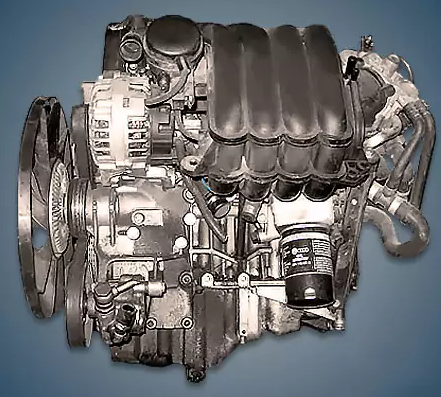
AEH, AHL, AKL, ALZ, ANA, APF, ARM, AVU, BFQ, BGU, BSE, and BSF are all part of the EA113-1.6 series.
Specifications
| Production years | 2000-2010 |
| Displacement, cc | 1595 |
| Fuel system | injector |
| Power output, hp | 102 |
| Torque output, Nm | 148 |
| Cylinder block | aluminum R4 |
| Block head | aluminum 8v |
| Cylinder bore, mm | 81 |
| Piston stroke, mm | 77.4 |
| Compression ratio | 10.2 – 10.5 |
| Features | SOHC |
| Hydraulic lifters | yes |
| Timing drive | belt |
| Phase regulator | no |
| Turbocharging | no |
| Recommended engine oil | 5W-30 |
| Engine oil capacity, liter | 4.5 |
| Fuel type | petrol |
| Euro standards | EURO 4 |
| Fuel consumption, L/100 km (for VW Passat B5 GP 2001) — city — highway — combined |
10.7 6.0 7.7 |
| Engine lifespan, km | ~330 000 |
The engine was installed on:
- Audi A4 B5 (8D) in 2000 – 2001; A4 B6 (8E) in 2000 – 2004; A4 B7 (8E) in 2004 – 2008;
- Seat Exeo 1 (3R) in 2008 – 2010;
- Volkswagen Passat B5 (3B) in 2000 – 2005.
Disadvantages of the VW ALZ engine
Vibrations and floating engine speeds are the most prevalent issues.
Cleaning the throttle or nozzles aids in eliminating the motor’s erratic operation.
The intake manifold’s rubber seal wear could also be the cause.
Crankcase ventilation system malfunctions rank second in terms of popularity.
An oil burn frequently starts closer to 200,000 km because of ring or cap wear.