
The 1.6-liter 8-valve Volkswagen AKL engine was manufactured between 1996 and 2010 and was found in a number of the company’s mass-market vehicles, such as Skoda and Seat vehicles. This motor is well-known throughout the world, especially for the highly sought-after Skoda Octavia Tour.
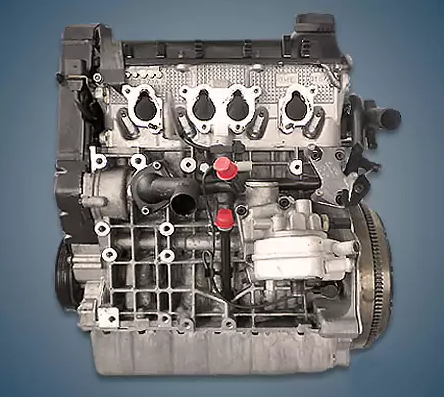
AEH, AHL, AKL, ALZ, ANA, APF, ARM, AVU, BFQ, BGU, BSE, and BSF are all part of the EA113-1.6 series.
Specifications
| Production years | 1996-2010 |
| Displacement, cc | 1595 |
| Fuel system | injector |
| Power output, hp | 101 |
| Torque output, Nm | 145 |
| Cylinder block | aluminum R4 |
| Block head | aluminum 8v |
| Cylinder bore, mm | 81 |
| Piston stroke, mm | 77.4 |
| Compression ratio | 10.3 |
| Features | SOHC |
| Hydraulic lifters | yes |
| Timing drive | belt |
| Phase regulator | no |
| Turbocharging | no |
| Recommended engine oil | 5W-30 |
| Engine oil capacity, liter | 4.5 |
| Fuel type | petrol |
| Euro standards | EURO 3/4 |
| Fuel consumption, L/100 km (for VW Golf 4 1998) — city — highway — combined |
10.5 5.6 7.6 |
| Engine lifespan, km | ~350 000 |
The engine was installed on:
- Audi A3 1 (8L) in 1996 – 2000;
- Seat Cordoba 1 (6K) in 1999 – 2002;
- Seat Ibiza 2 (6K) in 1999 – 2002;
- Seat Leon 1 (1M) in 1999 – 2000;
- Seat Toledo 2 (1M) in 1998 – 2000;
- Skoda Octavia 1 (1U) in 1997 – 2010;
- Volkswagen Bora 1 (1J) in 1998 – 2000;
- Volkswagen Golf 4 (1J) in 1997 – 2000.
Disadvantages of the VW AKL engine
Strong vibrations and floating engine speeds are the most well-known motor issues.
Cleaning a throttle or nozzles can often help eliminate these conditions.
All crankcase exhaust system malfunctions come in second.
Additionally, owners frequently lament the intake manifold’s lack of tightness.
An oil burn typically starts when rings or caps wear out after 200,000 kilometers.