
The sixth generation Passat model, the fifth Golf, and the Audi A3 in the 8P body all had the 2.0-liter turbocharged Volkswagen AXX 2.0 TFSI engine installed between 2004 and 2006. Updates to the motor replaced this power unit rather quickly.
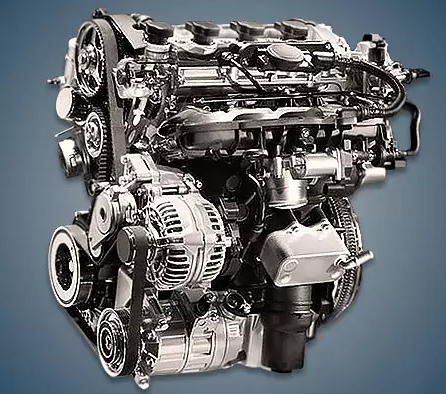
AXX, BPY, and BWA are part of the EA113-TFSI series.
Specifications
| Production years | 2004-2006 |
| Displacement, cc | 1984 |
| Fuel system | direct injection |
| Power output, hp | 200 |
| Torque output, Nm | 280 |
| Cylinder block | cast iron R4 |
| Block head | aluminum 16v |
| Cylinder bore, mm | 82.5 |
| Piston stroke, mm | 92.8 |
| Compression ratio | 10.5 |
| Features | DOHC |
| Hydraulic lifters | yes |
| Timing drive | chain & belt |
| Phase regulator | on the intake shaft |
| Turbocharging | KKK K03 |
| Recommended engine oil | 5W-30 |
| Engine oil capacity, liter | 4.6 |
| Fuel type | petrol |
| Euro standards | EURO 4 |
| Fuel consumption, L/100 km (for VW Golf GTI 2006) — city — highway — combined |
11.4 6.5 8.2 |
| Engine lifespan, km | ~240 000 |
| Weight, kg | 155 |
The engine was installed on:
- Audi A3 2 (8P) in 2004 – 2006;
- Volkswagen Golf 5 (1K) in 2004 – 2006;
- Volkswagen Passat B6 (3C) in 2005 – 2006.
Disadvantages of the VW AXX engine
This motor is well-known for using a lot of oil and producing more carbon.
Soot affects the intake’s variable geometry dampers and intake valves.
Here, the oil burner can be eliminated by swapping out the original pistons for forged ones.
Here, the timing belt covers roughly 90,000 kilometers, which is comparable to the inter-shaft chain.
The high-pressure fuel pump drive’s pusher or phase regulator may malfunction after 100,000 kilometers.
Bypass valve N249 and ignition coils both have a small resource.