
The company produced the 2.5-liter Audi AAT 2.5 TDI diesel engine from 1991 to 1997, but it was only used in two of the company’s models: the A6 in the C4 body and the 100 index. The long service life and excellent dependability of this five-cylinder power unit are well-known.
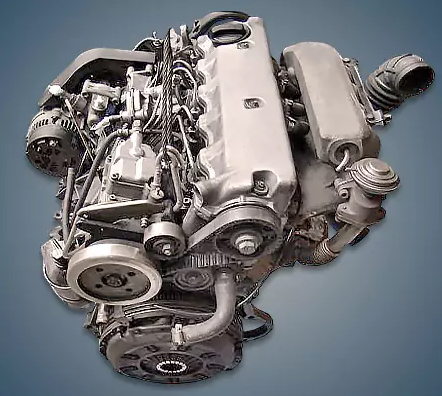
The EA381 series also includes: CN, AAS, AAT, 1T, AEL, AHD, BJK, BJM.
Specifications
| Production years | 1991-1997 |
| Displacement, cc | 2460 |
| Fuel system | direct injection |
| Power output, hp | 115 |
| Torque output, Nm | 265 |
| Cylinder block | cast iron R5 |
| Block head | aluminum 10v |
| Cylinder bore, mm | 81 |
| Piston stroke, mm | 95.5 |
| Compression ratio | 20.5 |
| Features | SOHC, intercooler |
| Hydraulic lifters | yes |
| Timing drive | belt |
| Phase regulator | no |
| Turbocharging | yes |
| Recommended engine oil | 5W-40 |
| Engine oil capacity, liter | 5.2 |
| Fuel type | diesel |
| Euro standards | EURO 2 |
| Fuel consumption, L/100 km (for Audi A6 1995) — city — highway — combined |
8.5 5.4 6.8 |
| Engine lifespan, km | ~550 000 |
The engine was installed on:
- Audi 100 C4 (4A) in 1991 – 1994;
- Audi A6 C4 (4A) in 1994 – 1997.
Disadvantages of the Audi AAT engine
Owners of one of the most dependable diesel engines of its era hardly ever worry about it;
The majority of issues are related to Bosch VE37 electronic injection pump malfunctions;
The aluminum cylinder head swiftly leads to mating surfaces because it fears overheating;
The turbine, mass air flow sensor, and hydraulic lifters may need to be replaced at high mileage; replacing a timing belt with rollers is costly, but when it breaks, the valves always bend.