
Before being restyled, the 3.0-liter Audi CGWA 3.0 TFSI engine was installed on the fourth-generation all-wheel drive version of the A8 model and assembled at the company’s factories between 2009 and 2013. Under the CAJA index, this power unit was basically a slightly modified version of the engine.
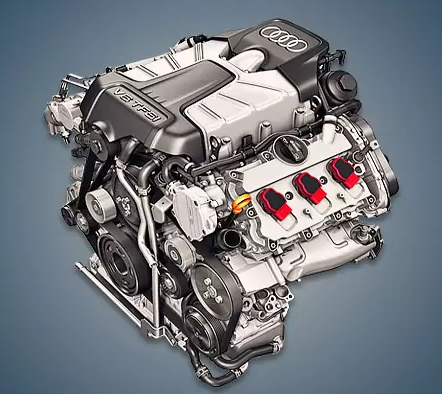
The EA837 series includes: BDW, AUK, BDX, CAJA, CGWA, CGWB, CREC.
Specifications
| Production years | 2009-2013 |
| Displacement, cc | 2995 |
| Fuel system | direct injection |
| Power output, hp | 290 |
| Torque output, Nm | 420 |
| Cylinder block | aluminum V6 |
| Block head | aluminum 24v |
| Cylinder bore, mm | 84.5 |
| Piston stroke, mm | 89 |
| Compression ratio | 10.5 |
| Features | DOHC |
| Hydraulic lifters | yes |
| Timing drive | 4 chains |
| Phase regulator | on the intake shafts |
| Turbocharging | compressor |
| Recommended engine oil | 5W-30 |
| Engine oil capacity, liter | 6.5 |
| Fuel type | petrol |
| Euro standards | EURO 5 |
| Fuel consumption, L/100 km (for Audi A8 2011) — city — highway — combined |
12.9 6.9 9.1 |
| Engine lifespan, km | ~240 000 |
The engine was installed on:
- Audi A8 D4 (4H) in 2010 – 2013.
Disadvantages of the Audi CGWA engine
Owners of A8s with these engines typically complain about higher oil consumption.
Usually, catalyst crumbs that are pulled into the cylinders cause scuffing.
The chains break during a cold start because the cylinder head oil channels lack check valves.
The wear of the hydraulic tensioner may also be the cause of this timing chain noise.
The muffler corrugations frequently burn out, and the high-pressure fuel pump has limited resources.