
The second generation Volkswagen Passat and the Audi 80 in the B2 and B3 bodies were equipped with the 1.8-liter Audi JN engine, which was manufactured at a German facility between 1984 and 1991. The KE-Jetronic distributed fuel injection system set this power unit apart.
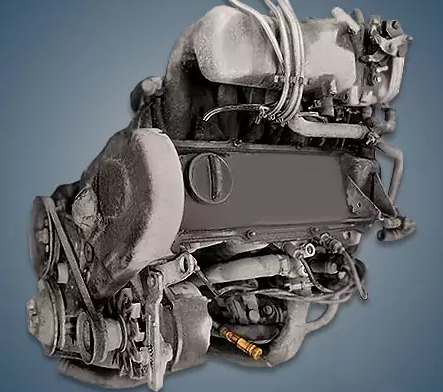
The EA827 1.8l series includes: JN, RP, AAM, ABS, ADZ, PF, ADR, ARG, AEB, ANB.
Specifications
| Production years | 1984-1991 |
| Displacement, cc | 1781 |
| Fuel system | KE-Jetronic |
| Power output, hp | 90 |
| Torque output, Nm | 137 – 145 |
| Cylinder block | cast iron R4 |
| Block head | aluminum 8v |
| Cylinder bore, mm | 81 |
| Piston stroke, mm | 86.4 |
| Compression ratio | 10.0 |
| Features | SOHC |
| Hydraulic lifters | yes |
| Timing drive | belt |
| Phase regulator | no |
| Turbocharging | no |
| Recommended engine oil | 5W-40 |
| Engine oil capacity, liter | 3.5 |
| Fuel type | petrol |
| Euro standards | EURO 1 |
| Fuel consumption, L/100 km (for Audi 80 1990) — city — highway — combined |
10.6 6.0 7.7 |
| Engine lifespan, km | ~350 000 |
| Weight, kg | 135 |
The engine was installed on:
- Audi 80 B2 (81) in 1984 – 1986;
- Audi 80 B3 (8A) in 1986 – 1991;
- Volkswagen Passat B2 (32) in 1984 – 1988.
Disadvantages of the VW JN engine
The majority of this unit’s issues are related to KE-Jetronic system malfunctions.
Few people know how to set up the injection system, so it cannot be said to be unreliable.
Low-quality oil is disliked by these hydraulic compensators, which may simply begin to freeze.
Oil scraper rings cause lubricant consumption at high mileage.
Temperature sensors and parts of the ignition system are also weak points.