
Only the Honda NSX sports models, including those made under the Acura brand, were equipped with the 3.0-liter 24-valve Honda C30A engine, which was manufactured in Japan between 1990 and 2005. This unit was available in two versions: one with 274 horsepower for a manual transmission and another with 256 horsepower for an automatic transmission.
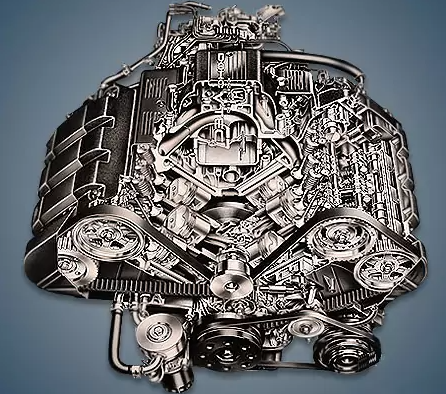
The engines in the C series are the C27A, C30A, C32A, and C35A.
Specifications
| Production years | 1990-2005 |
| Displacement, cc | 2977 |
| Fuel system | distributed injection |
| Power output, hp | 256 – 274 |
| Torque output, Nm | 284 |
| Cylinder block | aluminum V6 |
| Block head | aluminum 24v |
| Cylinder bore, mm | 90 |
| Piston stroke, mm | 78 |
| Compression ratio | 10.2 |
| Features | VVIS |
| Hydraulic lifters | no |
| Timing drive | belt |
| Phase regulator | VTEC |
| Turbocharging | no |
| Recommended engine oil | 5W-30 |
| Engine oil capacity, liter | 5.0 |
| Fuel type | petrol |
| Euro standards | EURO 2/3 |
| Fuel consumption, L/100 km (for Honda NSX 1995) — city — highway — combined |
17.9 9.1 12.4 |
| Engine lifespan, km | ~250 000 |
| Weight, kg | 195 |
The engine was installed on:
- Acura NSX 1 (NA) in 1990 – 2005;
- Honda NSX 1 (NA) in 1990 – 2005.
Disadvantages of the Honda C30A engine
The engine’s primary issue is oil consumption, which can occur up to 100,000 kilometers.
Monitoring the lubrication level is crucial because even a small drop in it can be hazardous.
The camshaft is frequently replaced, but occasionally you can get away with simply changing the pushers.
Every 90,000 miles, the timing belt is replaced; if it breaks, the valves are always bent.
The engine’s short-lived catalyst and ignition coils are among its weak points.