
From 2006 to 2014, a US facility produced Honda’s J37A 3.7-liter V6 engine, which was used in numerous Acura models as well as the largest and priciest Legend sedan. There were five variations of this motor, and they were not very different from one another.
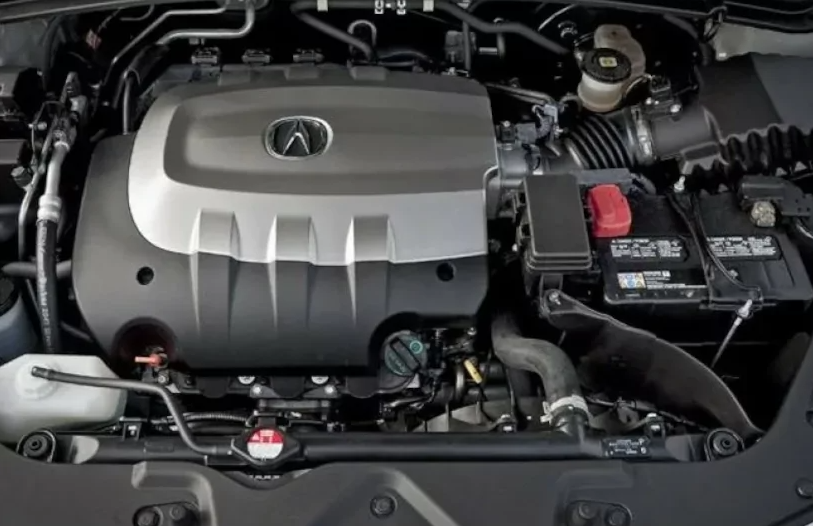
The renowned J37 engine was introduced especially for Acura vehicles. The J35 engine, which powered the new engine, did well on the larger Acura and Honda models starting in 1999. V-blocks with six cylinders and a height of 235 mm connect the two engines. This parameter was already equal to 96mm in the J37, in contrast to the J35, which had a crankshaft with a piston stroke of 93mm. The cylinders’ diameter grew by one millimeter, reaching ninety millimeters. The connecting rods are now 157mm instead of 158.5mm. The J37 had a single-shaft cylinder head with VTEC valve lift and variable valve timing.
Internal combustion engines J25A, J30A, J32A, and J35A are also part of the J-series.
The engine was mounted on:
- Acura MDX 2 (YD2) in 2006 – 2013;
- Acura RL 2 (KB) in 2008 – 2012;
- Acura TL 4 (UA8) in 2008 – 2014;
- Acura ZDX 1 (YB) in 2009 – 2013;
- Honda Legend 4 (KB) in 2008 – 2012.
Specifications
| Production years | 2006-2014 |
| Displacement, cc | 3664 |
| Fuel system | injector |
| Power output, hp | 295 – 305 |
| Torque output, Nm | 365 – 375 |
| Cylinder block | aluminum V6 |
| Block head | aluminum 24v |
| Cylinder bore, mm | 90 |
| Piston stroke, mm | 96 |
| Compression ratio | 11.0 – 11.2 |
| Features | SOHC |
| Hydraulic lifters | no |
| Timing drive | belt |
| Phase regulator | VTEC |
| Turbocharging | no |
| Recommended engine oil | 5W-30 |
| Engine oil capacity, liter | 4.3 |
| Fuel type | petrol |
| Euro standards | EURO 4/5 |
| Fuel consumption, L/100 km (for Honda Legend 2010) — city — highway — combined |
16.3 8.9 11.6 |
| Engine lifespan, km | ~320 000 |
| Weight, kg | 210 |
Disadvantages of the Honda J37A engine
This family of engines is renowned for its dependability and lack of flaws.
You must keep a close eye on the system’s oil level because of its small volume.
The valve bends when the timing belt resource, which is about 100,000 kilometers, breaks.
Throttle contamination is typically the cause of floating motor speeds.
There are no hydraulic lifters here, and valve adjustments are necessary every 50,000 kilometers.