
Overview & Design Features
The Cadillac GM Ecotec LCV engine represents a high-performance iteration within General Motors’ renowned Ecotec engine family. Primarily a 2.0-liter (1998 cc) turbocharged inline-four, this powerplant was engineered to deliver a compelling balance of spirited performance and commendable fuel efficiency for premium compact and mid-size vehicles. Developed by GM Powertrain, the LCV variant is a significant evolution, leveraging advanced technologies to meet the demands of the luxury segment where it saw extensive application, particularly within the Cadillac brand. Its introduction marked a strategic shift towards downsized, turbocharged engines offering V6-level performance with four-cylinder economy.
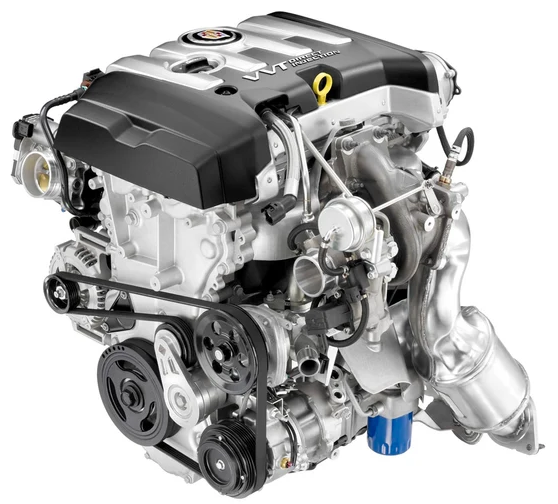
At its core, the LCV engine features a robust aluminum alloy cylinder block and cylinder head, contributing to reduced overall vehicle weight and improved thermal management. Fuel delivery is handled by a sophisticated high-pressure direct fuel injection system (SIDI), which precisely atomizes fuel directly into the combustion chambers, optimizing combustion efficiency and power output while mitigating knock. The valvetrain utilizes dual overhead camshafts (DOHC) with continuously variable valve timing (CVVT) on both intake and exhaust, allowing for dynamic adjustment of valve overlap to enhance torque across the RPM range and improve emissions. A twin-scroll turbocharger is typically employed, reducing turbo lag and providing rapid boost response.
This specific Ecotec LCV engine variant was primarily deployed in several Cadillac models. Notable applications include the Cadillac ATS 2.0T, produced from 2013 to 2019, and the Cadillac CT4 2.0T, which began production in 2020. It also found its way into other GM vehicles requiring similar performance characteristics, such as the Chevrolet Camaro 2.0T from 2016 onwards. In these vehicles, the LCV serves as the base or mid-tier engine option, offering a potent alternative to larger, naturally aspirated engines.
Technical Specifications
| Specification | Value |
|---|---|
| Displacement | 1998 cc |
| Max Power | 272 hp (203 kW) @ 5500 RPM (Cadillac ATS variant) |
| Max Torque | 400 Nm (40.8 kg*m) @ 3000-4600 RPM (Cadillac ATS variant) |
| Fuel Type | Premium Unleaded Gasoline (91+ RON recommended) |
| Fuel Consumption | Refer to specific vehicle model documentation; typically 8.7 l/100 km (combined) |
| Engine Type | Inline-4, Turbocharged, DOHC, Direct Injection |
| Compression Ratio | 9.5:1 – 10.2:1 (varies slightly by model year/tune) |
| Cylinder Bore | 86 mm |
| Piston Stroke | 86 mm |
| Valvetrain | DOHC, 16-valve, Continuously Variable Valve Timing (CVVT) |
| Valves per Cylinder | 4 |
| Additional Info | Aluminum block and head, Twin-scroll turbocharger, Spark Ignited Direct Injection (SIDI) |
Common Problems & Reliability
The Cadillac GM Ecotec LCV engine generally demonstrates respectable reliability, yet certain aspects warrant attention. A common issue associated with direct injection systems, including the LCV, is the propensity for carbon buildup on the intake valves. Since fuel is injected directly into the combustion chamber, it bypasses the intake valves, preventing their washing by fuel, which can lead to deposits. This can manifest as reduced engine performance, misfires, or rough idling, particularly at higher mileages. Another area of concern, albeit less prevalent than in earlier Ecotec generations, is potential timing chain wear. While designed for the life of the engine, extended oil change intervals or lack of proper lubrication can accelerate wear, leading to noise or even catastrophic failure if unaddressed. Finally, some instances of increased oil consumption can be observed, particularly in turbocharged engines under aggressive driving conditions or as mileage accumulates, often linked to PCV system operation or turbocharger seals.
With diligent and proper maintenance, the GM Ecotec LCV engine can achieve a significant service life. A realistic expected service life before requiring a major overhaul is in the range of 200,000 to 250,000 miles (approximately 320,000 to 400,000 kilometers), assuming factory-recommended service schedules are strictly adhered to.
Maintenance Tips & Service Schedule
Proactive maintenance is crucial for the longevity and performance of the Ecotec LCV engine. Regular engine oil changes are paramount; full synthetic oil meeting Dexos specifications (e.g., Dexos1 Gen 2/3) with a viscosity of 5W-30 or 0W-30 is recommended. Service intervals should adhere to the vehicle’s Oil Life Monitoring system, typically every 7,500 miles (12,000 km) or once a year, whichever occurs first, for conventional driving. For severe duty, more frequent changes may be necessary.
Spark plugs should be inspected and replaced every 45,000 to 60,000 miles (72,000 to 96,000 km) using original equipment iridium plugs. The timing chain is designed for the life of the engine and does not have a scheduled replacement interval; however, it should be inspected for excessive slack or noise at high mileages, particularly beyond 100,000 miles (160,000 km). Coolant flushes using Dex-Cool compatible coolant are typically recommended every 5 years or 100,000 miles (160,000 km). Air filters should be checked at every oil change and replaced every 30,000 miles (48,000 km). Periodical use of a high-quality fuel system cleaner specifically designed for direct injection engines can help mitigate carbon buildup on intake valves.
Conclusion
The Cadillac GM Ecotec LCV engine stands out as a highly capable and refined powerplant, offering impressive performance and efficiency for its displacement. For a used vehicle buyer, it represents a generally reliable choice, provided that its specific maintenance requirements are understood and consistently met. The potential for carbon buildup on intake valves and the need for high-quality, frequent oil changes are critical considerations. With a commitment to the recommended service schedule and an awareness of its common characteristics, vehicles equipped with the Ecotec LCV engine can deliver many miles of luxurious and spirited driving. Its strong performance and advanced engineering make it a commendable option within the used luxury car market.