
Overview & Design Features
The GM LGY is a modern 3.0-liter twin-turbocharged V6 gasoline engine designed and manufactured by General Motors specifically for its premium Cadillac brand. Introduced in 2020, this powerplant represents a highly sophisticated evolution of GM’s High Feature engine family. It serves as a direct complement to modern forced-induction architectures, offering a refined balance of high-performance output, thermal efficiency, and immediate throttle response tailored for contemporary rear-wheel-drive and all-wheel-drive luxury vehicle platforms.
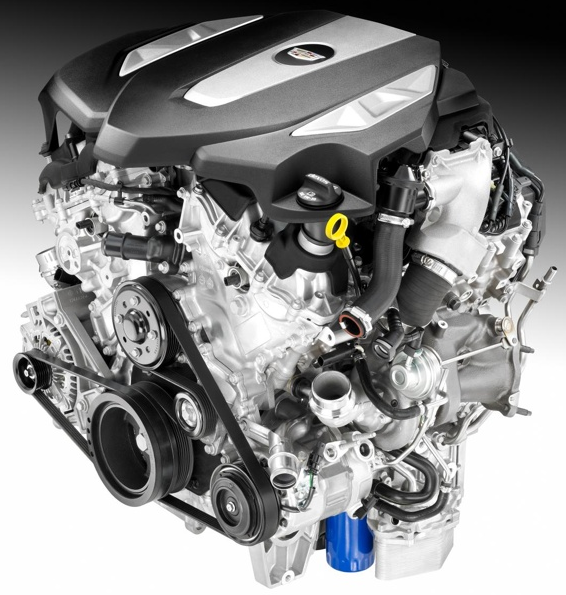
Constructed with an advanced high-pressure die-cast aluminum cylinder block and lightweight aluminum alloy cylinder heads, the LGY engine design prioritizes structural rigidity while minimizing front-end vehicle weight. Fuel delivery is managed via a high-pressure direct fuel injection system that sprays gasoline directly into the combustion chambers, optimizing the air-fuel mixture for cleaner combustion. The forced induction system features two twin-scroll turbochargers integrated directly into the exhaust manifolds, a design choice that drastically reduces turbo lag and maximizes low-end torque. Continuously Variable Valve Timing (VVT) works in tandem with GM’s Active Fuel Management (AFM) system, which can deactivate two cylinders under light load conditions to enhance fuel economy.
The GM LGY engine has been deployed exclusively within Cadillac’s premium sedan lineup. Specifically, it powers the Cadillac CT5 Premium Luxury trim from the 2020 model year to the present. Additionally, a higher-output variant of this engine serves as the heart of the performance-oriented Cadillac CT5-V starting from its debut in the 2020 model year.
Technical Specifications
| Displacement (cc) | 2,997 cc (3.0 Liters) |
| Max Power (hp (kW) @ RPM) | 335 hp (250 kW) to 360 hp (268 kW) @ 5,400 RPM |
| Max Torque (Nm (kg*m) @ RPM) | 550 Nm (56 kg*m) @ 1,500 – 4,000 RPM |
| Fuel Type | Premium Unleaded (91 Octane Minimum / 93 Octane Recommended) |
| Fuel Consumption (l/100 km) | Approx. 10.7 l/100 km (Combined cycle, vehicle dependent) |
| Engine Type | Twin-Turbocharged V6, 60-degree cylinder bank angle |
| Compression Ratio | 9.8:1 |
| Cylinder Bore (mm) | 86.0 mm |
| Piston Stroke (mm) | 85.8 mm |
| Valvetrain | DOHC with VVT and Active Fuel Management |
| Valves per Cylinder | 4 |
| Additional Info | Electronic wastegate control, integrated exhaust manifolds |
Common Problems & Reliability
- Carbon Buildup on Intake Valves: Due to the nature of direct fuel injection, fuel does not wash over the intake valves to clean them. Over time, carbon deposits can accumulate on the valves, which can eventually lead to airflow restrictions, rough idling, and a gradual reduction in engine power.
- Active Fuel Management (AFM) Wear: The lifters associated with the cylinder deactivation system can occasionally experience premature mechanical wear or noise if high-quality synthetic lubricants are not consistently used.
- Turbocharger Coolant and Oil Line Seepage: The extreme under-hood temperatures generated by the dual integrated turbochargers can accelerate the degradation of nearby rubber hoses, vacuum lines, and sealing gaskets over long-term operation.
Despite these high-performance complexities, a well-maintained GM LGY engine has a realistic expected service life of 250,000 to 300,000 kilometers (approximately 150,000 to 180,000 miles) before requiring a major mechanical overhaul.
Maintenance Tips & Service Schedule
- Engine Oil Changes: Replace the engine oil and filter every 8,000 to 10,000 kilometers (5,000 to 6,000 miles). Only use high-quality, fully synthetic engine oil meeting the GM dexos1 Gen 3 specification, with a viscosity of SAE 0W-30 or 5W-30 as recommended by environmental conditions.
- Spark Plug Replacement: Due to the high combustion pressures created by twin-turbocharging, spark plugs should be inspected and replaced every 80,000 to 96,000 kilometers (50,000 to 60,000 miles) to prevent ignition misfires.
- Cooling System Maintenance: The cooling system manages heat for both the engine block and the turbochargers. Perform a complete coolant flush and replacement every 5 years or 150,000 kilometers (90,000 miles).
- Intake Tract Cleaning: Periodic professional cleaning of the intake valves is highly recommended every 60,000 kilometers to mitigate carbon accumulation.
Conclusion
The GM LGY twin-turbo V6 engine is an impressive piece of modern automotive engineering that delivers outstanding performance and smooth power delivery. For a used vehicle buyer, it represents a safe and highly rewarding choice, provided that the previous owner documented a consistent, high-quality maintenance history. Buyers should verify that premium fuel was used exclusively and ensure that no signs of valve carbonization are present before finalizing a purchase.